
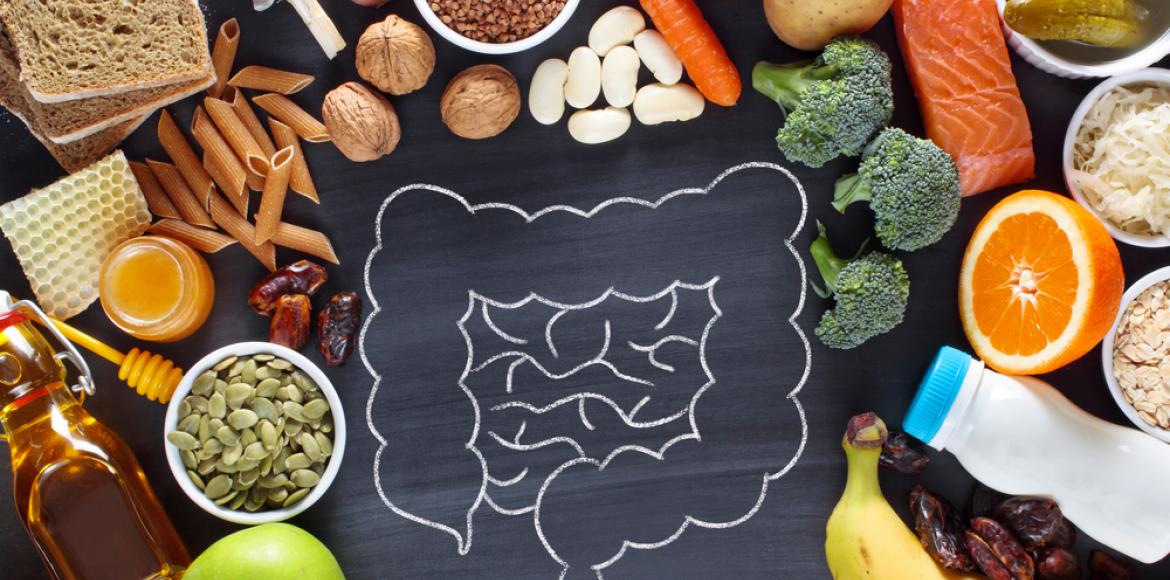
Here are 10 foods to include in your menus to support a balanced and diverse microbiota.
Certain foods act on your intestinal bacteria and help balance and diversify your microbiota. Depending on the case, they can provide prebiotic fibers which nourish the intestinal bacteria, provide probiotics (live bacteria) or even bioactive compounds, such as antioxidants, which will act positively on the intestinal microbiota.
Foods rich in prebiotic fiber
Jerusalem artichoke
This tuber, also known as the Jerusalem artichoke, is one of the “forgotten vegetables”. It is eaten roasted, in soup and even raw. Jerusalem artichoke contains a lot of inulin – a prebiotic fiber from the fructan family – which promotes development of beneficial bacteria (bifidobacteria) and reduces the presence of pathogens. Jerusalem artichoke is also an ally of intestinal transit.
Lenses
Sources of fiber and plant proteins, lentils are an asset for the intestinal microbiota, the composition of which they regulate. “Lentils provide galacto-oligosaccharides, one of the most beneficial prebiotic fibers available”says Dr. William Davis, author of the book Super Biotic. They contain in particular resistant starch which arrives intact in the large intestine where it is fermented by the bacteria of the microbiota. This leads to the production ofshort chain fatty acidswith beneficial effects for health.
Mushrooms
“Mushrooms are a prebiotic source that is too often neglectedwrites Dr. Davis. They contain various polysaccharides, beta-glucans, mannans, galactans, as well as polyphenols; so many compounds that nourish intestinal micro-organisms. Easy to add to salads and stir-fries, to serve as an accompaniment to meats, to incorporate into sauces or soups, they adapt to all cuisines.”
The polysaccharides contained in mushrooms exert a beneficial activity on the intestinal microbiota by acting as prebiotics. They thus stimulate the growth of beneficial bacteria, increase the production of short-chain fatty acids and improve the intestinal barrier (1, 2). Certain varieties are particularly interesting: reishi, maitake, shiitake, oyster mushroom.
A recipe: Pumpkin soup with shiitake mushrooms
Oats
Consumed in the form of flakes or bran, oats are a whole grain rich in soluble fiber, particularly beta-glucans. As such, it is beneficial for digestive health and contributes to a healthy microbiota. The presence of resistant starch is also an asset: oat flakes contain a very interesting quantity (11.3 g/100 g), which promotes the production of short-chain fatty acids.
A recipe: Low GI blinis with oat bran
Fermented foods, sources of probiotics
Plain yogurt
Yogurt is obtained by fermentation of milk by lactic acid bacteria (Lactobacillus bulgaricus And Streptococcus thermophilus in classic yogurt). It therefore contains live probiotics which directly enrich the intestinal microbiota which they help to diversify.
In his book Super BioticDr. William Davis offers yogurt recipes to make at home, because these have additional benefits, compared to commercial products : it is thus possible to select specific microorganisms, but also to extend fermentation times and add prebiotic fibers to feed the bacteria. “These additional efforts increase bacterial concentrations from a few million in conventional yogurts to several hundred billion, frequently a 1,000-fold increase.he explains. As a general rule, the higher the bacterial concentration, the greater the biological effect.”
A recipe: yogurt Lactobacillus gasseri
Source : Super Biotic
The BNR17 strain of L. gasseri helps reduce waist circumference by approximately 2.5 cm in 3 months, even without other changes in diet or physical activity. It also alleviates symptoms of irritable bowel syndrome, reduces blood and urine levels of oxalate, a risk factor for kidney stones, and effectively helps prevent recurrence of SIBO or SIFO thanks to its powerful bacteriocin-producing properties.
Ingredients
- 1 capsule of L. gasseri BNR17
- 2 tbsp. to s. sugar (sucrose) or prebiotic fiber (raw potato starch)
- 1 liter of light cream or other liquid to ferment
Preparation
In a salad bowl, mix the contents of a probiotic capsule, the sugar and 2 tbsp. to s. light cream. Dissolve the sugar and prebiotic fibers in a little liquid to dissolve the sugar well and avoid lumps. Stir to obtain a homogeneous preparation. Add the rest of the light cream. Cover loosely (e.g. with cling film), place in your fermentation machine and leave to ferment at 43°C for 36 hours. For subsequent fermentations, use 2 tbsp. to s. curd or whey from a previous fermentation.
Another recipe: Megabiotik coconut yogurt
Milk kefir
Kefir is a fermented drink obtained from milk and kefir grains which contain microorganisms – lactic acid bacteria and yeast – necessary for fermentation. It can be drunk as is or used in recipes. Renowned for the well-being of the digestive tract, kefir provides dozens of strains of probiotics. “The great microbial diversity of kefir could even offer some protection against the proliferation of Enterobacteriaceaethe bacteria frequently implicated in SIBO”explains Dr. William Davis. Most kefirs contain 20 to 40 bacterial species and 7 to 50 billion bacteria, 10 times more than natural yogurt.
Kombucha
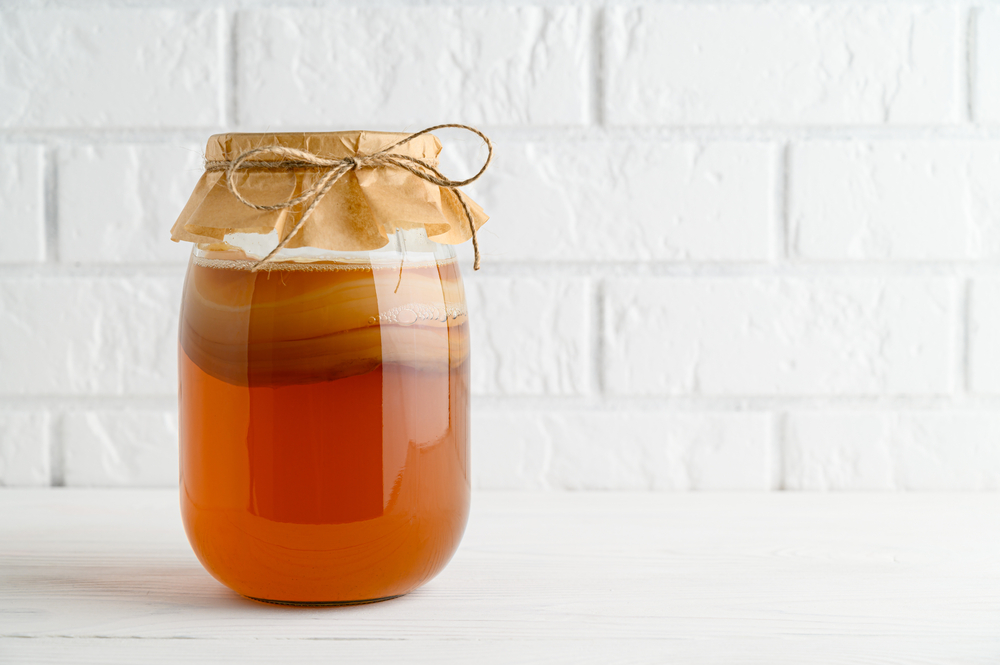
Kombucha is a beverage made from tea and sugar, fermented by a symbiotic culture of bacteria and yeast called SCOBY (Symbiotic Culture Of Bacteria and Yeast). Kombucha contains probiotics – mainly acetic, lactic acid bacteria and yeasts – but also polyphenols which allow it to modulate the intestinal microbiota.
Recipe: Kombucha
Sauerkraut
Sauerkraut is lacto-fermented cabbage, nothing more. To prepare it you need cabbage, salt and an airtight jar to allow spontaneous fermentation of the cabbage. This in fact contains lactic ferments which will multiply and transform carbohydrates into lactic acid. Here too, a homemade preparation is preferable. “Pickles and sauerkraut can be fermented, but most products sold in supermarkets are not. They are simply preserved in vinegar and brine, without fermentation”explains William Davis.
Consuming sauerkraut improves bacterial diversity and regulates the composition of the microbiota (increases good bacteria, decreases harmful ones) (3). However, if it is cooked, it loses its living bacteria, but retains its fibers.
Foods rich in polyphenols
Cranberry
The cranberry is a small red berry that contains a non-digestible compound belonging to xyloglucans. This acts as a prebiotic and promotes the growth of a specific strain of Bifidobacterium longum, beneficial to the intestinal microbiota. In addition, the polyphenols present in cranberries interact with the microbiota in a bidirectional manner: they inhibit the growth of pathogenic bacteria, stimulate that of beneficial bacteria and conversely the microbiota can degrade them into bioavailable and potentially bioactive metabolites (4).
Walnuts
Rich in fiber, polyphenols and omega-3, walnuts, which belong to the oilseed family, are beneficial for intestinal health. Their consumption improves the composition of the microbiota by increasing the presence of beneficial bacteria (Bifidobacteria) and reducing that of pro-inflammatory bacteria (5, 6).