
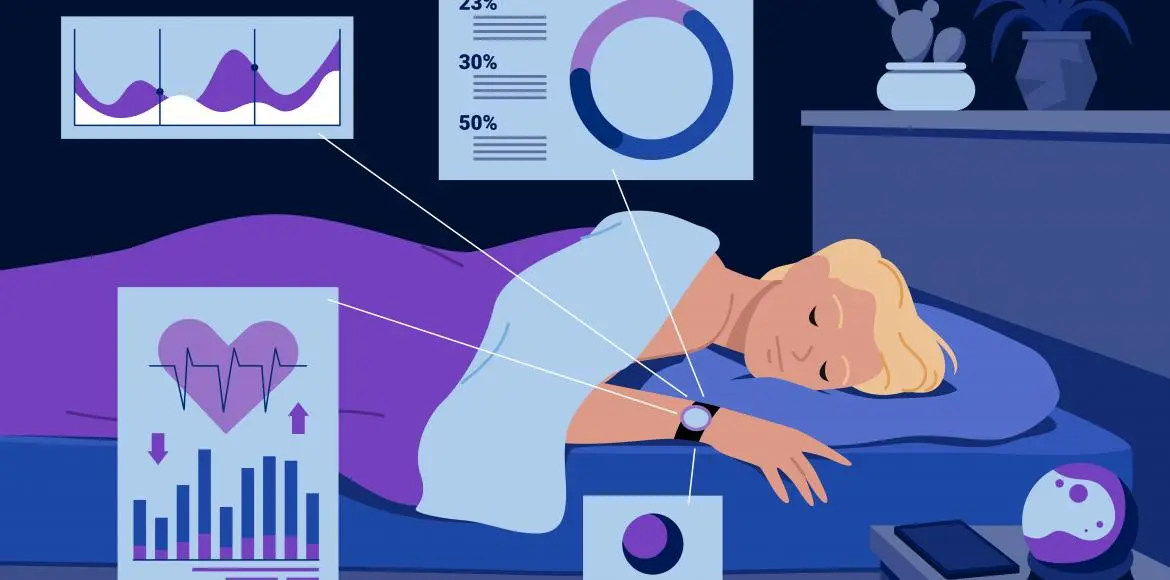
Stanford researchers have developed artificial intelligence capable of predicting more than 100 diseases — cancers, Parkinson’s, dementia, cardiovascular diseases — based on data from a single night’s sleep.
Sleeping well is essential to health: lack of sleep is associated with a number of disorders, ranging from overweight to obesity, including cardiovascular and neurodegenerative diseases.
The way we sleep could reveal more than just how tired we are: it could reveal our risk of developing certain diseases. This is what researchers at Stanford Medicine wanted to know, by developing an artificial intelligence tool, called SleepFM (1).
600,000 hours of data to train the model
The system was trained on nearly 600,000 hours of polysomnography data from 65,000 people whose sleep was assessed at different sleep clinics. “We record an impressive amount of signals when we study sleepexplains Dr Emmanuel Mignot, co-author of this study (2), in a press release. This is a form of general physiology that we study for eight hours in a completely immobile subject. The data collected is extremely rich. »
The model integrated data from electroencephalography, electrocardiography, electromyography, pulse and respiratory flow, for example, to infer interrelationships. The researchers first tested their model to analyze standard sleep: distinguishing sleep phases and diagnosing sleep apnea.
Decades of medical records crossed with sleep
Then they cross-referenced these records with health data because they had access to more than half a century of medical records from a sleep clinic. Thus, the largest cohort of patients used to train SleepFM—35,000 patients aged 2 to 96 years—was the subject of polysomnographic recordings between 1999 and 2024. The researchers associated this polysomnographic data with their medical records, allowing follow-up of up to 25 years for some patients.
Result: the model was able to predict cancers, cardiovascular diseases, mental or neurodegenerative disorders with good precision. Predictions were particularly good for cancers, pregnancy complications, circulatory diseases and mental disorders, with a C index (concordance index) greater than 0.8. This index measures the predictive performance of a model: a C index of 0.8 means that in 80% of cases, the model’s prediction agrees with reality. SleepFM thus predicted Parkinson’s disease (C index: 0.89), dementia (0.85), hypertensive heart disease (0.84), heart attacks (0.81), prostate (0.89) and breast cancer (0.87).
These results open the way to the use of sleep as a predictive tool in preventive medicine.
Sleeping well, the key to longevity
Biohackers have understood this well: sleep is one of the essential keys to living a long, healthy life. In his book, Hyperhealth, Dave Asprey gives several tips for quality sleep in particular:
- Equip yourself with an application to track your sleep.
- Have good sleep hygiene: no screens or meals in the two hours before bedtime, calming and tidy room…
- Use suitable food supplements such as ashwagandha or magnesium.
To go further: I’m learning to sleep better
-
Historical
- on 02/17/2026