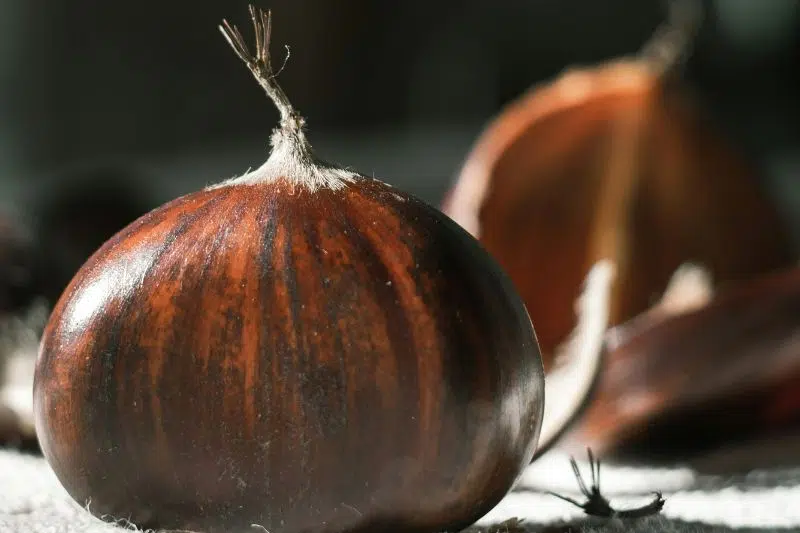
A true autumnal gem, the Ardèche chestnut is a delicious fruit capable of enhancing many recipes. From the undergrowth to the kitchen, dive into the heart of the tradition of its centuries-old orchards and discover how to prepare it.
A majestic emblem of the Cévennes mountains and volcanic undergrowth, the Ardèche AOP chestnut is much more than a simple autumn fruit: it is a true gastronomic signature.
Sweet, melting, with sweet notes of brioche and pumpkin, it nourishes men as much as it enhances the greatest classics of our cuisine. From centuries-old orchards to starred restaurants, discover the manufacturing, history and tasting secrets of this treasure which this year celebrates 20 years of excellence as a Protected Designation of Origin.
A story of passion and preserved terroir
Nicknamed “the breadfruit tree”, the chestnut tree has shaped the Ardèche landscape for centuries. Although the fossilized presence of the fruit dates back more than 8.5 million years near Privas, its cultivation developed in the 13th century thanks to the art of grafting. A subsistence tree par excellence, the chestnut tree has saved generations from famine.
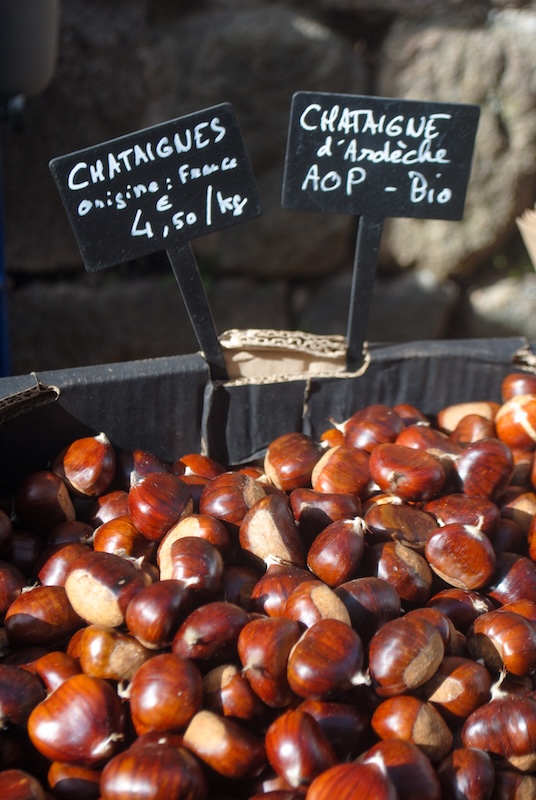
Obtained in 2006 (AOC) then confirmed at European level in 2014, the Protected Designation of Origin (AOP) Châtaigne d’Ardèche recognizes an exceptional terroir. Spread across 197 communes between 300 and 900 meters above sea level, the chestnut grove benefits from acidic and volcanic soils combined with a Mediterranean climate nuanced with mountain influences.
The AOP is based on a very rich genetic heritage: no less than 65 centuries-old traditional varieties (including the Red mouththere Combalthere Blackbird or the Sardonne) are rigorously selected. Lowland hybrids are scrupulously excluded to preserve unique aromas.
A know-how of gold and wood
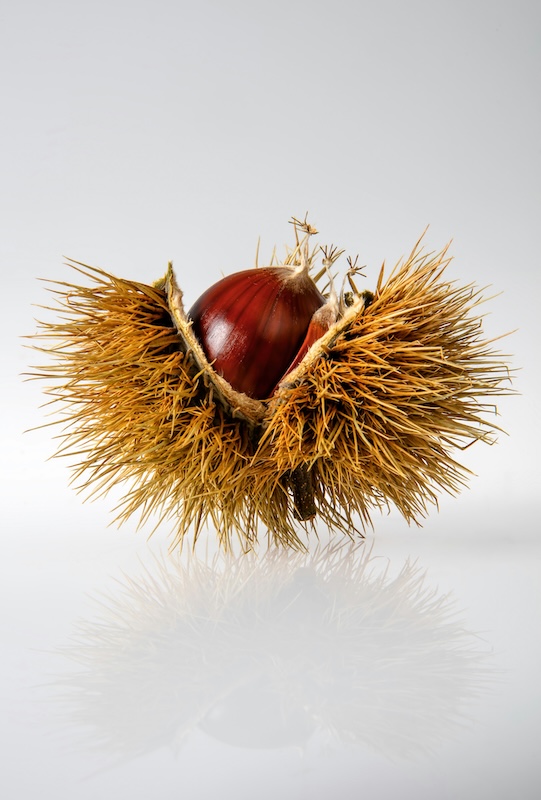
Each season dictates the rhythm of the castanéiculturists. In winter: careful maintenance of orchards, pruning and pruning. In spring: renewal of orchards through grafting and planting. In summer: meticulous cleaning of the soil under the canopy and installation of net networks. In autumn it’s finally harvest time!
From late September to November, bugs naturally fall to the ground.
Although 70% of the harvest is now mechanized, manual picking remains alive in steep terrain, where a good picker collects up to 100 kg of fruit per day.
Deeply eco-responsible, this castaneiculture is mainly practiced without phytosanitary products. 70% of farms are certified in Agriculture B. In addition, the maintained orchards form natural barriers against slope erosion and the advance of fires.
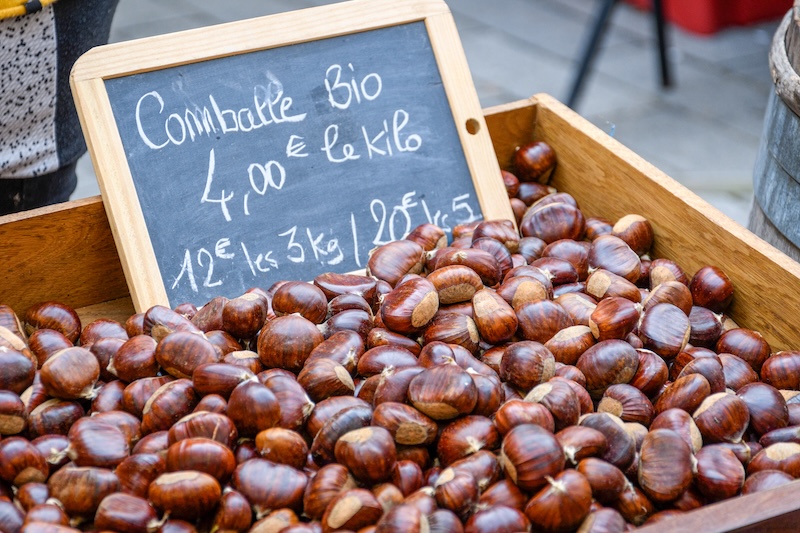
Ardèche excellence
Once harvested, the Ardèche chestnut is sorted, calibrated, packaged and shipped. In AOP, it is found in three forms.
- Fresh chestnut : ideal for grilling over a wood fire or roasting in the oven;
- The dry chestnut : traditionally dried in “clèdes”, perfect for stews or soups;
- Ardèche chestnut flour : naturally gluten-free, remarkably soft, ideal for baking.
The Ardèche is also home to historic houses which have raised this fruit to the rank of gourmet myth: Clément Faugier (founded in 1882), emblematic creator of chestnut cream, the Sabaton Housea pioneer in candied chestnuts and candied fruits, Chestnuts Imbertrecognized for the purity of their pure chestnut pastes and purees or even Concept-Fruits / Descours Groupcombining tradition and modern peeling processes.
Chestnut or chestnut?
Make no mistake! The term “chestnut” is often a culinary or commercial name intended to ennoble the chestnut (as in chestnut glazed). The real horse chestnut, fruit of the urban ornamental chestnut tree, unfit for consumption, is toxic!
Ardèche Chestnut in the kitchen: our best recipe ideas
Thanks to its sweet notes of brioche, sweet potato and honey, the chestnut is available from aperitif to dessert, enhancing everyday life.
Start gently with a velvety texture: opt for a delicious creamy chestnut with foie gras or an irresistible chestnut velouté with candied chestnut pieces, served with scallops.
The chestnut brings an unrivaled fondant to roasted meats and seasonal pans. It is prepared, for example, as a tasty autumn pan-fried with chestnuts. It accompanies guinea fowl with apples, tender veal breast stuffed with chestnuts, chicken with candied chestnuts and spices. And for a very delicious veggie version, it is served with squash cannelloni.
Just as irresistible in a sweet version, it can be enjoyed as a daily snack or as a festive dessert. It is made into a spread or fine puree to stuff madeleines.
It also transforms into simple treats, such as sweet chestnut cream, chestnut-pear tart, crème brûlée with chestnut cream, chocolate mousse with chestnut cream.
Finally, on festive days, it slips into a pear, chocolate and whipped cream crown and combines with vanilla in a delicious and melting log recipe.
When and where to celebrate the chestnut in Ardèche?
Every autumn, Ardèche vibrates to the rhythm of the Castagnades, large village festivals coordinated by the Monts d’Ardèche Regional Natural Park. Producers’ markets, giant rotisseries, guided hikes and gourmet competitions punctuate around ten emblematic towns (Saint-Pierreville, Privas, Joyeuse, Antraïgues, Desaignes, etc.).
And for an immersion in the world of chestnuts, all year round, don’t miss a visit to the House of the Chestnut Tree in Saint-Pierreville or Castaneathe interactive discovery space in Joyeuse.
Cover visual © Nasia M. – Unsplash