
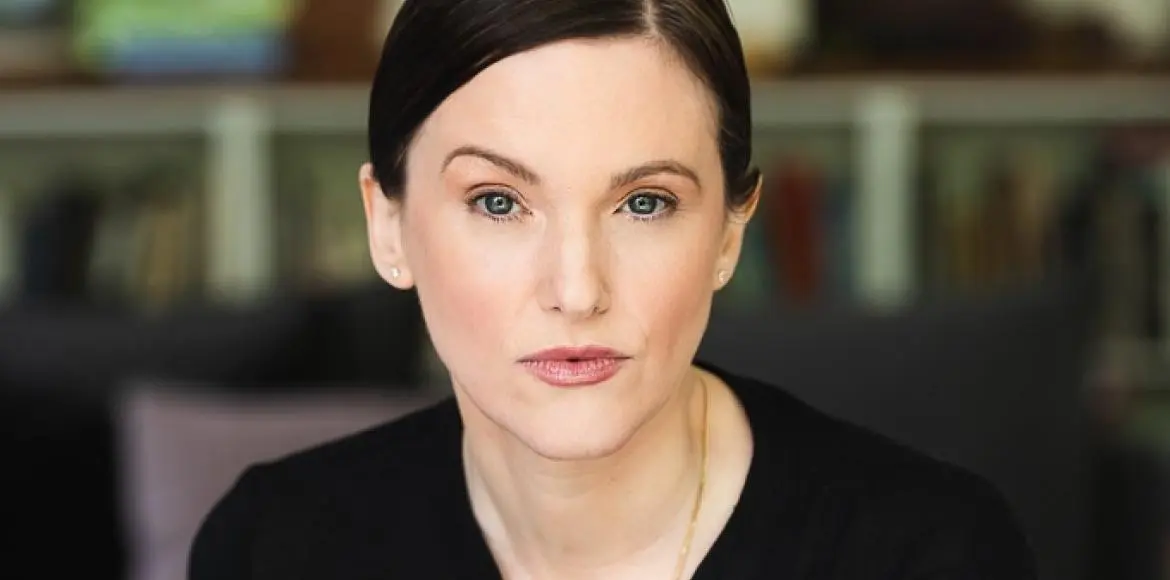
Lisa Mosconi, world-renowned neuroscientist publishes Menopause starts in the brain. She demonstrates that menopause is not just a matter of ovaries: it is first and foremost a cerebral transformation. But by understanding what is happening in their brain, by adopting the measures she recommends, women can emerge even stronger from this period.
Nutrition World: What do you mean when you say that menopause begins in the brain?
Dr. Lisa Mosconi : This is probably the most important thing I wish every woman understood. For decades, we’ve been told that menopause is when the ovaries stop working. But this is a terribly reductive view of what is really happening.
When a woman says she has hot flashes, night sweats, insomnia, memory loss, depression or anxiety, all of these symptoms start not in the ovaries but in the brain. Because the brain and ovaries are connected by a network called the hypothalamic-pituitary-gonadal axis. It is a constant communication system between the ovaries and specific parts of the brain like the hypothalamus, which regulates body temperature and is now known to produce hormones.
How does the brain intervene?
What my research shows is that the brain anticipates this transition well before menopause. The brain receives signals from the ovaries telling it that it is time to prepare. Then, once the ovaries stop making estrogen and progesterone, the brain isn’t done yet. It takes up to ten years to truly stabilize, find a new balance and move on. And results vary from person to person.
Your brain imaging research shows dramatic changes in the brain during menopause. What exactly do we see?
It’s fascinating! We use tracers that go into the brain and allow us to see these beautiful, colorful maps of the brain that most people are familiar with. What we see is that estradiol, an estrogen, is really crucial for energy production in the brain.
At the cellular level, it literally causes neurons to burn glucose for energy. If your estradiol is high, your brain energy is high. But when your estradiol decreases, your neurons start to slow down and age more quickly. For women, brain energy gradually declines during menopause. The hippocampus, which is responsible for memory, is very sensitive to estradiol; this is also the case for the frontal cortex, which helps us with reasoning, multitasking and also language. So when estradiol drops, the frontal cortex doesn’t get everything it needs to function coherently. This explains memory loss and brain fog.
However, you say that menopause can have benefits for the brain. Can you expand?
This is an aspect that I find absolutely sublime. Research has shown that menopause is a neurologically active state that, like puberty and pregnancy, changes the brain, resulting in the well-known symptoms.
But at the same time, this rewiring of the brain strengthens your networks again to the point that several things happen once the transition is complete.
In particular, postmenopausal women have the highest levels of cognitive and emotional empathy of any age and gender group on this planet. There’s a whole evolutionary explanation behind this, including the fact that a human society benefits from people who are empathetic, generous, and able to support others.
So yes, rewiring on one hand triggers symptoms that need to be treated. But it’s probably a good thing in the long run. This is what allows the brain to get rid of what it no longer needs, such as resources enabling pregnancy, and prepare a woman for the next stage of her life. A stage that is no longer reproductive, but which can be just as productive.
Let’s talk about nutrition. What is particularly important for the brains of women going through menopause?
This is a topic that fascinates me as a neuroscientist and nutritionist.
For women going through menopause, three nutritional elements are particularly important: fiber, antioxidants and anti-inflammatory nutrients. These seem to be most consistently associated with brain health, for life.
Personally, being of Italian descent, I have always followed a Mediterranean diet but I now follow a more plant-based version of this diet. I have calculated that I can only achieve a certain goal in terms of fiber, antioxidants, phytoestrogens and anti-inflammatory nutrients if I focus on plant foods. This is an aspect that I develop in my book.
There’s also something crucial that many people forget: hydration. The brain is made up largely of water. Even mild dehydration causes fatigue and irritability.
You have done pioneering research on Alzheimer’s disease. What is the link with menopause?
Several women in my family have been diagnosed with Alzheimer’s, including my grandmother and her two sisters. So this is a subject that particularly touches me.
Here’s what we found: Estrogen literally protects the brain. So when women lose these hormones during menopause, the brain becomes more vulnerable to aging and diseases like Alzheimer’s.
We see higher levels of beta-amyloid, lower glucose metabolism, and reduced gray and white matter volumes in women compared to men of the same age.
But our research also shows that the brain has the capacity to find a new balance after menopause in most women. If they take care of themselves during menopause, if they take the right steps, like those I suggest in my book, they can emerge from menopause with a renewed and improved brain, and usher in a meaningful and exciting new chapter in their lives.
The brain has the capacity to find a new balance after menopause in most women
Let’s talk about hormone replacement therapy (HRT). This is a very controversial subject. What is your position as a neuroscientist?
Hormone replacement therapy has been controversial for decades, ever since the controversial results of the Women’s Health Initiative study. But many women manage menopause based on information that is unfortunately not accurate or up to date. Many decisions are based on fear rather than facts.
Hormone therapy, whether perimenopause or menopause, or both, is truly the most effective treatment for menopausal symptoms. And, as we see in my research, it’s just as important for preventing some of the long-term consequences of estrogen deprivation as we age, like osteoporosis or cognitive impairment.
When to start treatment?
Timing is absolutely crucial. Studies indicate that it is more effective and less risky to start treatment early, ideally just after the onset of menopause. In my book, I explain the value of cutting-edge hormone replacement therapies, as well as the benefits to be expected from lifestyle changes relating to diet, exercise, personal balance and internal dialogue.
It is time we understand that to treat a hormonal process, it makes sense for hormones to be part of that treatment. But every woman is different, and this is something that needs to be discussed with a healthcare professional who truly understands menopause from the brain’s perspective.
Finally, what message should we send to women who are approaching menopause or who are currently going through it?
My message is simple: what you feel as a woman is real but neurological in origin. And there are solutions. Menopause is not the end. It’s a transition.
Menopause begins in the brain, this is my love letter to womanhood and a rallying cry for all women to approach menopause without fear or embarrassment, armed with knowledge and confidence. It’s time for them to open this new chapter of their life with all the power of their brain.
To go further: Menopause starts in the brain
-
Historical
- on 02/20/2026