
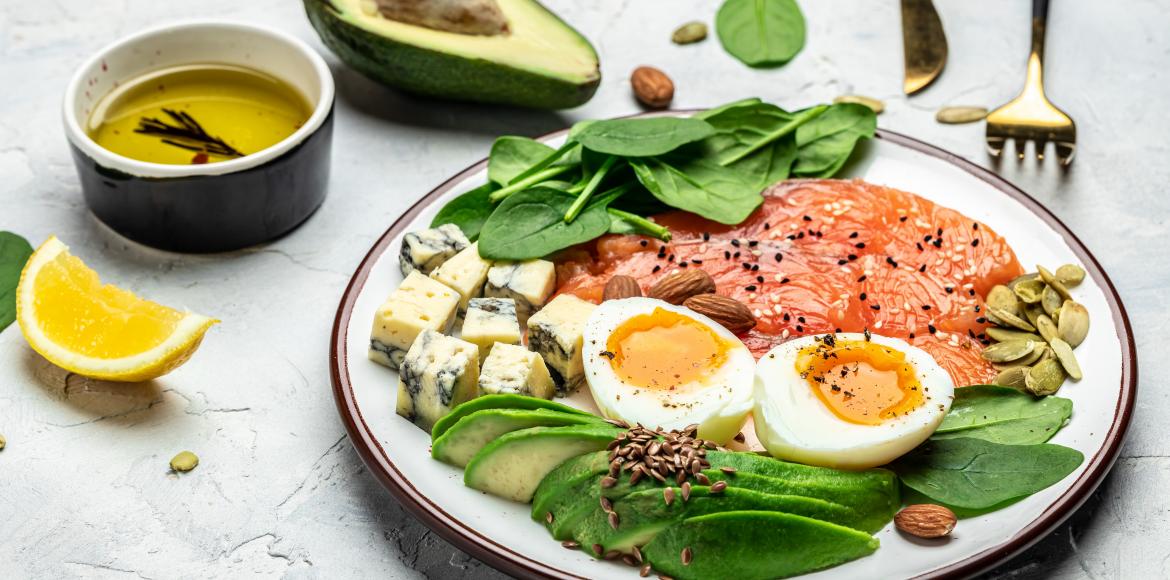
In an American clinical trial, three diets achieved similar weight loss. But the one that reduced liver fat the most was the ketogenic diet. It also improved blood sugar control. Explanations.
Are all diets the same, as long as they make you lose weight? No, because for some people, there may be other associated objectives: improving the health of their liver as well as controlling their blood sugar. A randomized trial conducted at the Washington University School of Medicine in Saint-Louis (United States), recently published in Cell Metabolismwanted to know what was the best diet for this.
Three diets, one weight loss
The researchers randomly assigned 55 obese adults to three groups. All had prediabetes and fatty liver, i.e. excess fat in the liver.
- The first group followed a ketogenic diet (4% of calories in the form of carbohydrates, 73% of lipids).
- The second followed a Mediterranean diet (50% carbohydrates, 35% lipids).
- The third followed a low-fat plant-based diet (70% carbohydrates, 15% lipids).
All meals were provided, and each group lost about 10% of their weight over five months. And in all three groups, muscle sensitivity to insulin increased by about 50%.
For Professor Samuel Klein, one of the authors of the study, “These three diets—despite very different macronutrient compositions, ranging from very low carbohydrate to very high carbohydrate—were shown to improve metabolic health through weight loss alone. »
The liver, the big winner of the ketogenic
The differences appear on the liver side. On the ketogenic diet, liver fat was reduced by 67%, compared to 45% on the other two diets. And liver sensitivity to insulin improved two to three times more on keto.
In addition, 24-hour blood sugar levels fell by 20% in the ketogenic group, compared to 8% in the others. Blood insulin levels fell by 74%, compared to 44% on the Mediterranean diet and 27% on the low-fat plant-based diet.
Read: 6 concrete strategies to control blood sugar (subscribers)
Finally, half of the participants in the ketogenic group were no longer prediabetic at the end of the study, compared to 29% in the Mediterranean group and 7% in the low-fat group.
Another interesting finding: Although patients in the keto group ate more fat, there was no difference between the groups in blood LDL cholesterol or triglyceride concentrations.
The choice of diet remains important because it has an impact on health parameters that go beyond weight loss.
An alternative to medication?
For Dr Max Petersen, lead author of the study, “Many patients with metabolic disorders may also benefit from treatment with GLP-1 medications, which have been shown to be very effective in helping people lose weight. However, our results show that the choice of diet remains important, because it has an impact on certain health parameters that go beyond simple weight loss. »
Steatosis affects approximately 75% of obese adults worldwide. “Our study shows that in obese people with fatty liver disease, a low-carb ketogenic diet could help reduce this figure,” says the researcher.
Read: Everything you need to know about fatty liver disease
Switch to low carb or keto diet
The ketogenic diet is an “extreme” version of the low carb diet. It can be difficult to follow in the long term. With a less drastic low-carb diet, we can already observe beneficial effects, as Magali Walkowicz, dietician-nutritionist, explains in The low carb big book. According to her, the low carb diet helps improve liver health. “Triglyceride levels, ALT, AST, GGT generally return to normal values very quickly”she writes. She reminds us that carbohydrates, in particular fructose from fruits consumed in excess, are very aggressive for this major organ which must absolutely be protected.
We can therefore reserve the ketogenic diet for cases where a low-carb diet is not enough, or for certain pathologies.
Before getting started, Magali Walkowicz invites you to ask yourself a few questions. Are you ready to accurately calculate your protein, carbohydrate and fat intake? To eat very fatty? Not to stand aside, even in society?
She also recommends paying attention to your potassium intake, because cutting out fruits and reducing vegetables can lead to a deficit.