
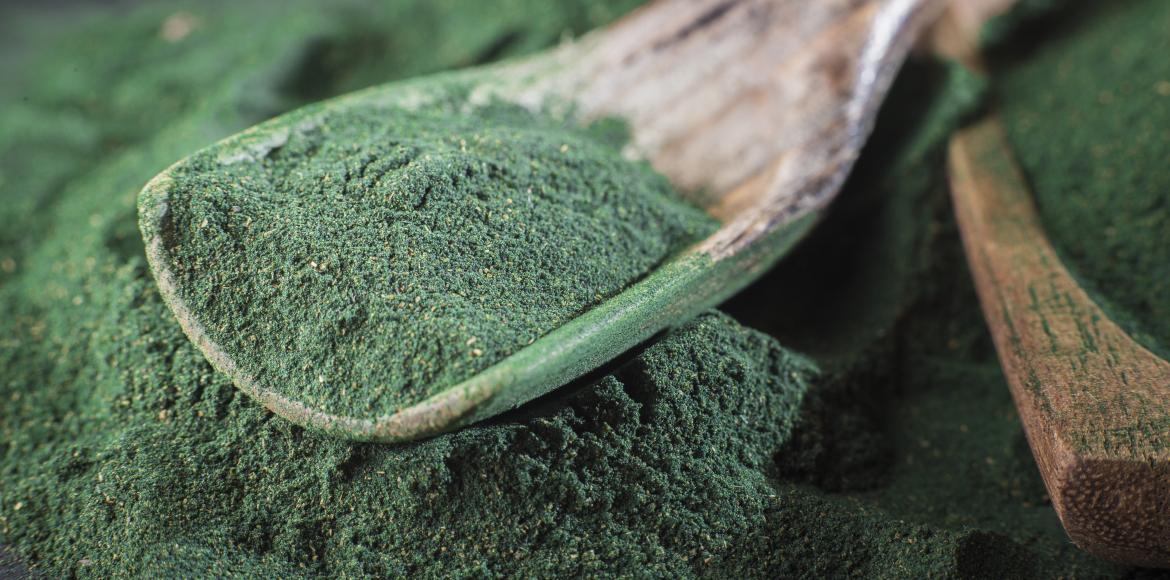
Rich in protein, spirulina is a cyanobacteria that concentrates many beneficial nutrients. Used as a supplement or in cooking, it has an interesting nutritional profile for athletes, vegetarians or to combat fatigue.
Green-blue in color, spirulina is a filamentous cyanobacteria in the shape of a spring, hence its name. There are many varieties; the best known, distributed in food supplements, comes from the species Arthrospira platensis. Native to South America, Africa and Asia, spirulina is cultivated throughout the world.
From the Aztecs to the lakes of Chad
When Europeans arrived in America, they observed that the inhabitants of what is now Mexico were eating small green pancakes, probably containing seaweed. “Long before the arrival of Christopher Columbus, and since time immemorial, the Aztecs consumed spirulina which they mixed with their traditional dish, Indian corn served with a spicy tomato saucesays Brigitte Karleskind in the Complete Guide to Spirulina. It even seems that the Mayans cultivated spirulina using a very sophisticated network of canals. »
At 20e century, in the 1940s, the botanist and mycologist Pierre Augustin Dangeard, on a mission to Chad, described green cakes, “dihés”, consumed by the Kanembou tribe. He guesses that the dihés are made up of a puree of blue-green algae, the main constituents of phytoplankton found in lakes in the African valley.
Later, in 1964, a Belgian botanist, Jean Léonard, noticed the presence of blue-green spirulina cakes on Chadian markets. “He practices botanical and value analyzes
food on samples from Kanemsays Brigitte Karleskind, and confirms that dihes are made from spirulina from alkaline lakes located in the Kanem desert. »
The industrial cultivation of spirulina began in the 1960s and developed from the 1970s. In 1995, a natural lake containing spirulina was discovered in France, in the Camargue, the algae having probably been transported by pink flamingos during their migration.
A remarkable nutritional composition
The exceptional nutritional composition of spirulina has led to consideration of its use against malnutrition, particularly in developing countries. The FAO (Food and Agriculture Organization of the United Nations) promotes and recommends its production (1).
Spirulina is best known for being rich in protein, iron and antioxidants. We present its composition for 10 g of dried powder and compare it with the recommended daily intake.
Proteins constitute between 55 and 70% of the dry weight of spirulina, which is significantly higher, in proportion, than what is found in meat or fish. These proteins provide all the essential amino acids (2). The most abundant protein in spirulina is phycocyanin, a pigment that represents 10 to 20% of the dry weight. It is attributed a large part of the health benefits of spirulina, in particular the antioxidant, anti-inflammatory and immunomodulatory effects (see article by Anne-Laure Denans in Le Monde de la Nutrition from June 2026). Spirulina is also a source of polyunsaturated fatty acids, vitamins B, E, and beta-carotene.
“This nutritional richness allows it to be studied in contexts where nutrients must be produced with relatively few resourcesexplains Margaux Caïa, agronomy engineer and spirulina producer in Ain. LThe European Space Agency is working in particular on spirulina as part of its MELiSSA program, which aims to develop life support systems for future space missions. Thanks to photosynthesis, spirulina can notably help consume CO₂ and produce oxygen, while constituting a source of assimilable proteins and nutrients. »
Why take spirulina
For vegetarians and vegans
Thanks to its high protein content, spirulina can represent an interesting supplement to meet the daily protein needs of people who do not consume animal products. However, it would be necessary to consume significant quantities to cover all your needs; spirulina can only be considered as a complement to a diet already providing proteins.
For athletes
Spirulina appears to be able to improve the performance of athletes during high-intensity exercises. Thus, a small study on 11 untrained men showed that spirulina supplementation (6 g per day) significantly reduced oxygen consumption and heart rate during arm pedaling (3). “Spirulina helps reduce oxidative stress which appears during intense sports practicecomments Brigitte Karleskind. This would reduce muscle microlesions, improve the use of fat as fuel, reduce the feeling of fatigue and improve performance and recovery. » His advice: 3 to 10 g of spirulina per day in courses of approximately 3 weeks. During periods of intensive training, athletes can go up to 20 g per day.
To combat fatigue
Given its antioxidant properties and its richness in proteins, vitamins and minerals, spirulina is often recommended in cases of fatigue. However, the evidence is somewhat lacking. Thus, we can find a pilot study which tested daily supplementation with 3 g of spirulina for 8 weeks on physical and intellectual fatigue in 17 healthy men. The volunteers were subjected to physical and mental tests (elliptical trainer, mental arithmetic). The participants reported a reduction in their feeling of fatigue which they began to perceive 4 hours after the first intake of spirulina and which lasted until the end of the study (4).
To reduce cardiovascular risk
Spirulina seems interesting for combating high blood pressure. According to a meta-analysis of 5 randomized controlled trials including 230 people, spirulina supplementation leads to a significant reduction in systolic and diastolic blood pressure, particularly in hypertensive patients (5). In these studies, the dose of spirulina ranged from 1 to 8 g per day, and the duration of the intervention ranged from 2 to 12 weeks. Spirulina could therefore contribute to the prevention and treatment of hypertension.
Against allergic rhinitis
A study carried out on 53 people suffering from allergic rhinitis who took for 2 months either 2 g of spirulina per day or an antihistamine (cetirizine) showed a significant improvement in symptoms (rhinorrhea, nasal obstruction, etc.) in the experimental group compared to the control group (6). Sleep quality as well as daily professional and social activities also improved significantly with spirulina. Spirulina therefore proves to be more effective than cetirizine in alleviating the main symptoms in patients with allergic rhinitis and can be considered as a therapeutic alternative for these patients.
To control your blood sugar
According to a meta-analysis of eight studies, spirulina supplementation may have beneficial effects on fasting blood sugar and blood lipid profile (7). Spirulina may be beneficial in part through an effect on oxidative stress and inflammation. Warning: if taking antidiabetic treatment, consult a healthcare professional before taking spirulina.
Spirulina, instructions for use
In the kitchen, you can sprinkle spirulina in salads, soups, yogurts, compotes, smoothies, cooked dishes. It can also be incorporated into a vinaigrette sauce or guacamole. In hot dishes, it must be added at the end of cooking to avoid losing its nutritional qualities.
If you don’t like the taste of spirulina, prefer food supplements, the doses generally being 1 to 5 g per day. In the event of drug treatment or pathology, seek advice from a healthcare professional.
Reduced to powder, dried and packaged in airtight packaging, protected from humidity and light, spirulina can retain its nutritional qualities for several years.