
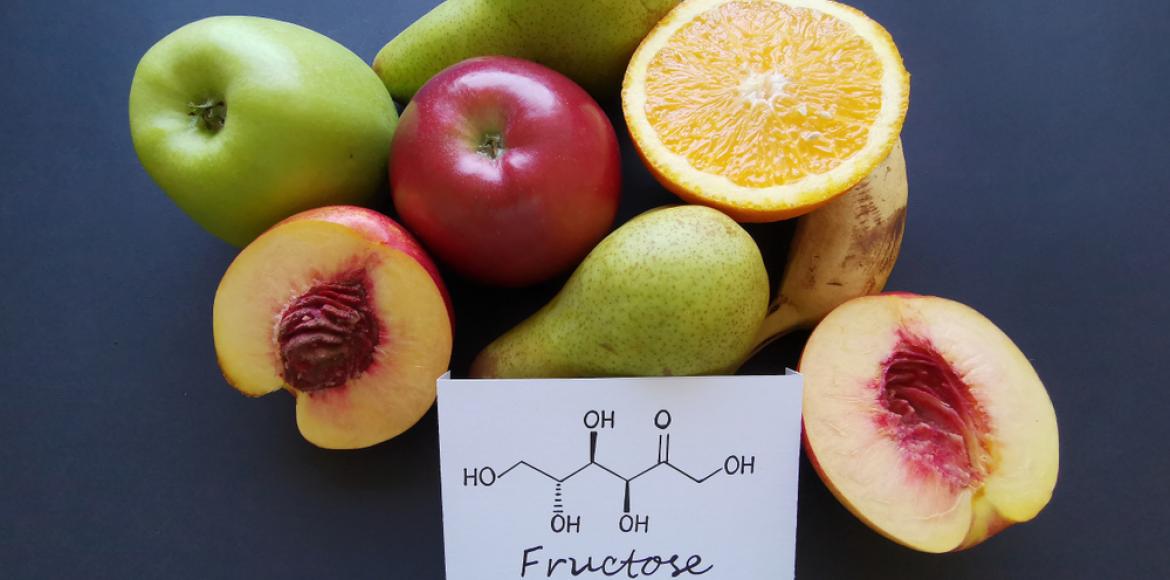
If fruits provide natural sugars, should we avoid them?
“Eat 5 fruits and vegetables a day”: this official recommendation seems to put fruits and vegetables on an equal footing, even though fruits often contain sugars. Also diabetics and people who pay attention to their figure might be tempted to be wary of it. But fruit sugar doesn’t have the same effect as added sugar in pastries, cakes and cookies. Explanations.
Fruit sugar
Fruits contain fructose, a simple sugar with the same chemical formula as glucose (C6H12O6), but with a different spatial configuration. Fructose has a lower glycemic index (GI) than that of sucrose, table sugar, but a greater sweetening power than the latter. Manufacturers obtain fructose from sources like corn, and add it to sodas and other ultra-processed foods.
This added fructose is dangerous for your health. According to different studies, high consumption of fructose, mainly in the form of sugary drinks, is a risk factor for metabolic diseases. Fructose has the effect of fattening the liver, due to its particular metabolism, as explained by Dr. Robert Lustig, author of the book Sugar – the bitter truth : “Many people believe that fructose is empty calories, he said. But no, these are toxic calories because they are only metabolized by the liver, and the liver turns the excess into fat.”
In fruit, the amount of fructose is actually relatively low. The most important sources include honey, dates and dried figs (see figure). But fresh fruit contains less: around 6 g per 100 g in an apple or 2 g per 100 g in strawberries, for example.
Should we avoid eating fruit because it contains fructose? No ! In fruits, fructose is accompanied by micronutrients and fiber which have a beneficial effect on weight and satiety. If we compare a can of soda to an apple, although the quantity of fructose is similar, we observe that the apple provides 2 g of fiber, and the soda not at all, and that the latter contains other sugars in quantities (sucrose in particular). Only processed foods with added fructose or high fructose corn syrup should be avoided.
| Food | A 33 cl can of soda cola | An apple 150 g |
|---|---|---|
| Total sugars in g | 33 | 15 |
| Fructose in g | 9 | 9 |
| Fibers in g | 0 | 2 |
In addition, fruits contain antioxidants. Citrus fruits and red fruits are particularly well endowed with it. Fruits also provide vitamins, minerals and other phytonutrients (carotenoids, polyphenols, etc.) that are beneficial to health. Finally, certain fruits are particularly rich in water. They are therefore hydrating and help to support you. This is why it is advisable to start a meal with fruit so that you are less hungry afterwards!
Read also: The list of antioxidant foods (subscribers)
Consumption of fruit is beneficial to health
Various studies have shown the benefits of consuming fruit, often with that of vegetables (for example in the Mediterranean diet), but also independently of it. Thus, observational studies show that the consumption of fruits and vegetables is associated with a reduced risk of coronary heart disease. However, according to a meta-analysis of nine studies, consuming an additional serving of fruit per day reduces the risk of coronary heart disease by 7% (1).
Likewise, and this is important to know for diabetics, a large cohort study has demonstrated that the consumption of certain whole fruits reduces the risk of type 2 diabetes: this is particularly the case for blueberries, grapes and apples. But “greater fruit juice consumption is associated with higher risk”say these authors (2).
Finally, eating fruit at the start of a meal reduces appetite (3). Fruits are therefore interesting in a diet for weight loss. However, if you follow a ketogenic diet, some will probably be prohibited. “You have to be careful with fruits that contain large amounts of sugar: favor red fruits, berries, lemon which contain less,” advise Ulrich and Nelly Genisson in The great book of ketogenic diet.
Read: The 10 fruits with the lowest sugar content
Conclusion
While it is true that a diet high in added sugars makes you gain weight, fruits should not be excluded from a healthy diet. To benefit from their full potential, it is better to eat them whole, rather than in juice, even homemade juice.
To go further: The right carbohydrates
Read an EXTRACT>>
-
References
-
Historical
-
Dauchet et al. Fruit and vegetable consumption and risk of coronary heart disease: a meta-analysis of cohort studies. J Nutr. 2006.
-
Muraki et al. Fruit consumption and risk of type 2 diabetes: results from three prospective longitudinal cohort studies. BMJ. 2013.
-
Houchins et al. Effects of fruit and vegetable, consumed in solid vs. beverage forms on acute and chronic appetitive responses in lean and obese adults. Int J Obes. 2012.
-
Current version
10/12/2024 - 11/29/2024