
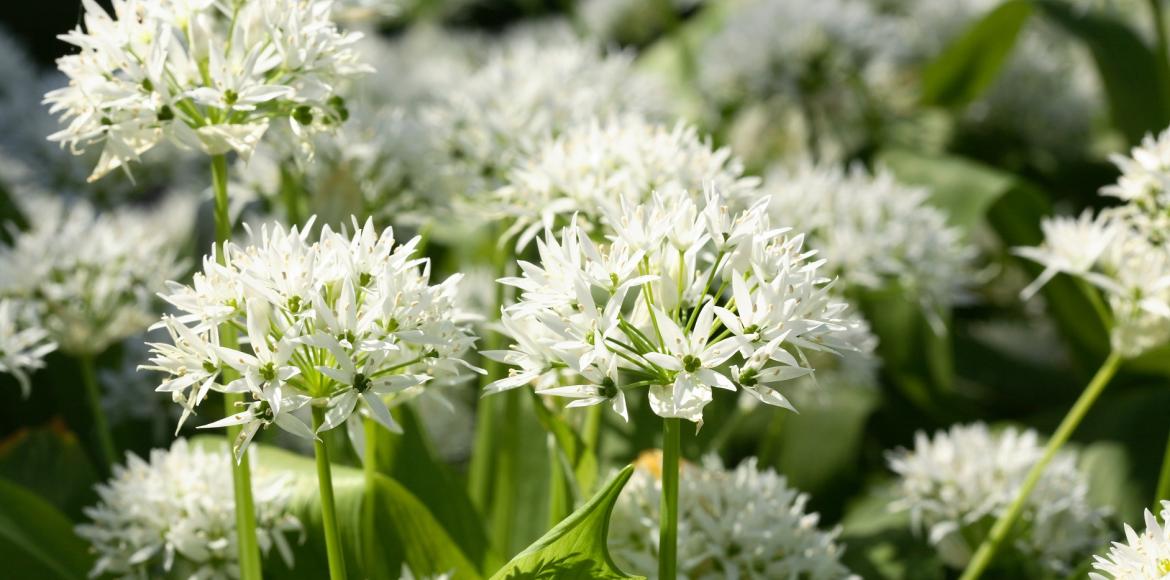
In March and April, it is the season to pick wild garlic leaves in our forests. Discover what this plant can bring you, in cooking or as a supplement.
Wild garlic or wild garlic, Allium ursinum, is a plant used for centuries in traditional medicine. It owes its name to the period when it appears in our forests: when the bear comes out of hibernation. It is said that the plantigrade consumes it to free itself from toxins and regain strength in spring.
In traditional European medicine, wild garlic is recommended to stimulate digestion, as an antimicrobial agent, to detoxify the body and prevent cardiovascular diseases. But what are its proven properties and what molecules does it contain?
Also read: 7 wild plants we should eat
Picking wild garlic: where to find it and how to avoid confusion
Wild garlic is a medicinal plant common in Europe, between the Mediterranean area and Scandinavia. It grows in mountainous and forest areas, on fertile and humid soils, up to 1900 m altitude (1). In February-March, each plant forms smooth, lanceolate and elliptical leaves, which give off a recognizable garlic smell. Present in large quantities in the undergrowth, these edible leaves form a green carpet. Later, a taller flowering stem (up to 40 cm) appears with white flowers. The vegetation of thewild garlic lasts until June.
THE leaves can be used fresh in cooking, but also dried for use in herbal medicine.
Harvest Tips
If you pick the leaves yourself, be careful not to confuse them with those of arum, colchicum or lily of the valley, which are all toxic plants. Picking wild garlic is certainly preferable before flowering, for their content of active ingredients. But if you are a novice, there is a real risk of confusion with other species. The characteristic garlic smell remains a good clue.
Composition of wild garlic: the active ingredients that make its reputation
The garlic odor of the plant is due to the release of sulfur compounds characteristic of species of the genus Allium. The leaves of the plant contain many bioactive compounds, namely flavonols, flavanols, phenolic acids and sulfur compounds, including alliin and its breakdown product allicin. As these sulfur compounds break down, they form other aromatic molecules, such as diallyl disulfide and trisulfide. It is in March and April, before flowering, that sulfur compounds are most abundant.
Benefits of wild garlic: what the studies really say
The properties of wild garlic were studied in experiments in vitro And in vivo in animals, but human studies are lacking (2). The plant has antioxidant properties, thanks to the polyphenols and flavonoids present.
Here are the main results obtained.
Against cardiovascular diseases
L’garlic is traditionally recommended to lower blood pressure and improve cardio-metabolic parameters.
Antimicrobial effect
Wild garlic inhibits the proliferation of bacteria such as Staphylococcus aureus, Bacillus subtilis, Escherichia coli, Salmonella enteritidisbut also mushrooms (antifungal effect) thanks to the presence of sulfur compounds.
Anticancer effect
Wild garlic limits the viability of cancer cell lines and improves that of non-carcinogenic tissue cells. Sulfur compounds, resulting from the degradation of thiosulfinates, including diallyl disulfide, are capable of inhibiting the proliferation of malignant cells by inducing apoptosis (3).
Probiotic potential
There plant contains lactic acid bacteria beneficial for the intestinal microbiota, including Lactobacillus fermentumof the Streptococcus and Bacillus.
Read: Garlic reduces cardiovascular risk by acting on intestinal flora
How to use wild garlic: fresh, dried or as a food supplement
If you don’t pick wild garlic yourself, it can be found dried in the spice section of organic stores or in the form of pesto. There are also food supplements that contain it.
Wild garlic in capsules: dosage and instructions for use
For difficult digestion problems, you can take two wild garlic capsules morning and evening, outside of meals until symptoms improve (4). Follow the manufacturer’s advice.
Wild garlic in the kitchen: how to cook and store it
You can eat wild garlic leaves raw in salads or use it to make pesto. Wild garlic leaves can be dried or macerated in alcohol for the preparation of local food products, such as rennet cheeses and fermented milk products.
2 easy wild garlic recipes
Tomatop: the tomato sauce of the brains
According to The dish of tricksby Martine Cotinat
Ingredients
- 2 tbsp. to s. tomato paste
- ¼ tsp. to c. turmeric
- 1 tbsp. to s. camelina oil
- 1 tbsp. to s. olive oil
- 1 tbsp. to c. wild garlic
- Grated fresh garlic
- Pepper
Preparation
Mix all the ingredients, it’s ready!
Vegetable tartare “microbiota style”
According to Lose weight with pleasure by charming your bacteriaby Martine Cotinat
Perfect as a starter on endive leaves or zucchini slices.
Preparation: 10 mins
Ingredients for 4 people as an aperitif
- 3 tbsp. to s. dried dandelion leaves
- 3 tbsp. to s. wild garlic powder
- 4 tbsp. to s. dried fisherman’s seaweed (mixture of sea lettuce, nori and dulse)
- 1 organic lime
- 1⁄2 orange
- 3 tbsp. to s. organic olive oil
- 3 tbsp. to s. organic rapeseed oil
- 1 tbsp. to c. low-salt tamari
- 3 tbsp. to s. almond powder
- 3 finely chopped spring onions
- 1⁄2 bunch of parsley
- 1 bunch of chives
Preparation
Finely chop the parsley and chives.
Zest the lemon, then squeeze it and the half orange.
In a bowl, mix the olive oil, rapeseed oil, lemon juice, lemon zest, orange juice, dandelion greens, wild garlic and dried seaweed. Leave to rest for 5 minutes.
Add the almond powder, spring onions, parsley and chives and tamari.
Mix, it’s ready! To be kept at fridge before serving.
FAQ – Wild garlic: frequently asked questions
What is the difference between wild garlic and classic garlic?
Wild garlic (Allium ursinum) is a wild species that is picked in the forest in spring. It contains the same active sulfur compounds (alliin, allicin) as cultivated garlic, but is mainly consumed in the form of fresh or dried leaves, whereas common garlic is rather used by its bulbs.
How to recognize wild garlic so as not to confuse it?
The most reliable criterion is the smell: when crushed between the fingers, wild garlic leaves give off a characteristic garlic smell. Lily of the valley, colchicum and arum, which visually resemble it and are toxic, do not have this smell.
When is wild garlic season?
The leaves appear from February to April depending on the region. Before flowering is the best time to pick them.
-
References
-
Historical
-
Szczepaniak et al. Allium ursinum as a Centuries-old Medicinal Plant. Short Review of Anti-inflammatory and Antimicrobial Properties of the Rare Garlic Species. Planta Medica. 2025.
-
Sobolewska et al. Allium ursinum: botanical, phytochemical and pharmacological overview. Phytochem Rev. 2013.
-
Stanisavljević et al. Antioxidant and Antiproliferative Activity of Allium ursinum and Their Associated Microbiota During Simulated in vitro Digestion in the Presence of Food Matrix. Front Microbiol. 2020.
-
Rock. The Bible of Healing Plants. E/P/A Editions. 2019.
-
Current version
04/24/2026 - on 03/16/2020