
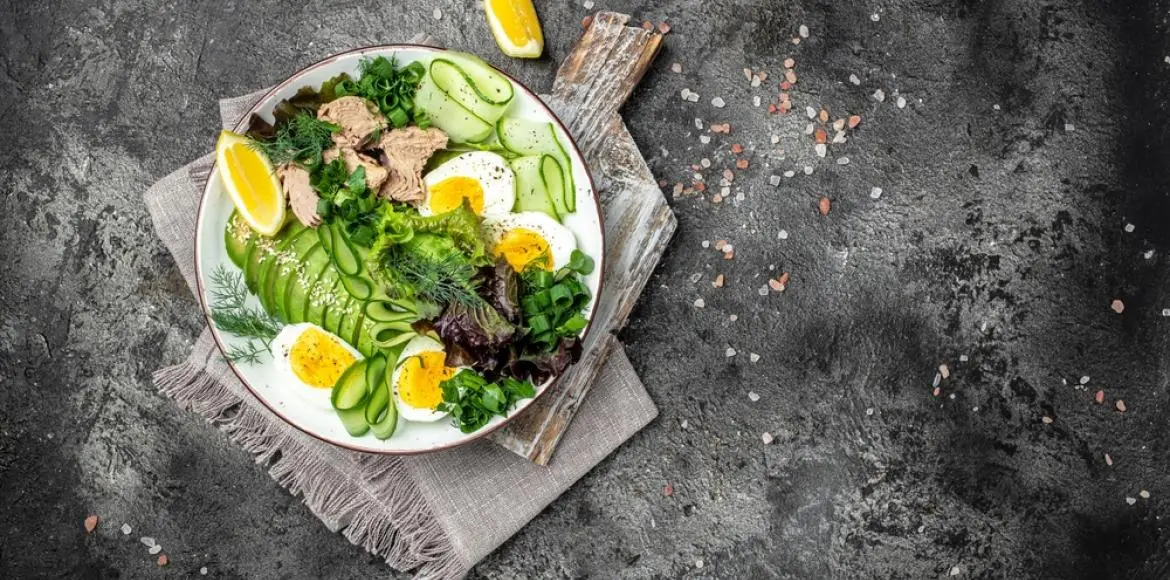
Losing weight while enjoying yourself is possible! Follow the advice of Magali Walkowicz, dietician-nutritionist and author of Great book of low carb.
Low-carbohydrate, or low-carb, diets not only help you lose weight, but also improve health problems, such as diabetes, hypertension or fatty liver disease. In its strictest version, the low carb diet comes in the form of the ketogenic diet, also associated with weight loss and improved metabolism. The amount of carbohydrates consumed daily ranges from 15 g for the strictest diet, to 120 g for the most permissive.
The most famous low-carb diet is probably the Atkins diet, which was redesigned in 2011 by three university professors of medicine, Drs Eric Westman, Stephen Phinney and Jeff Volek. This new Atkins diet, low in carbohydrates and without calorie limitation, takes place in several phases: it starts with a fairly strict restriction of carbohydrates, then the menus evolve little by little depending on the person’s sensitivity to carbohydrates. The first phase, the strictest, promotes the consumption of foods with high nutritional density – lean proteins, a wide variety of fiber-rich vegetables and healthy fats – excluding sugars and starches.
But concretely how can you reduce your daily carbohydrate intake? “A low carb recipe which constitutes a complete dish for a meal must generally provide 12 to 15 g of carbohydrates maximumexplains Magali Walkowicz. It can be constituted meat, fish, eggs, cold meats, cheese, vegetables, low-sweet fruits, oilseeds, very dark chocolate… These foods can be cooked with oil, butter, crème fraîche, vegetable creams… and garnished with spices, various low-sugar condiments (there are many) and aromatic herbs. »
Here are 4 principles to keep in mind to switch to low carb easily.
Tip #1: wean yourself off sugar
It is essential to get out of the habit of eating sugar. “It’s a kind of reset of the neurotransmitters that you operate. Sugar activates taste receptors on the tongue which in turn send signals to the brain to activate the reward system and release neurotransmitters like dopamine. »
Replace sugar with fat. Eat good fats with every meal: nuts, seeds, extra virgin olive oil, extra virgin coconut oil, avocados and omega-3 from fish. For example, for a snack, fat bombs can replace the little sweet bites that you used to enjoy (without overdoing them though!).
A recipe: Ketogenic fat bombs
Sweeteners can also provide an alternative to sugar, although they are not necessarily the solution because they maintain a sweet habit.
To find out which sweetener to choose, read our article in The World of Nutrition for January 2025
Tip #2: Choose Good Fats
“Dietary fats such as first cold-pressed virgin oils (ideally organic), animal fat (duck fat), ghee (clarified butter) are an integral part of low-carb cooking, said Magali Walkowicz. You can add as many as you want. » On the other hand, she advises having a lighter hand with crème fraîche, whipping cream, oilseed creams (such as coconut cream, almond cream, soy cream, etc.), oilseed purees (peanut butter, hazelnut, almond or pistachio purees, etc.) because although they are very rich in fat, they still contain a little carbohydrate.
Ghee, or clarified butter, supports cooking at high temperatures.
Here is his recipe: Ghee or clarified butter
A keto recipe with ghee, proposed by Josée Arsenault: Endives à la carbonara
Tip #3: Find alternatives to starchy foods
There are low-carbohydrate alternatives to replace rice and pasta, such as konjac. “You can replace the rice with gohan, the spaghetti with shirataki and the tagliatelle with kishimen, advises Magali Walkowicz. Konjac is one of the staple foods in the diet of Japanese women who watch their figure. »
A dessert with konjac: Muhallebi without sugar
“Other alternatives include soy pastas, black bean pastes and edamame pastes.. You can also cut tagliatelle from carrots, black radish, celeriac, etc. with a vegetable peeler. »
A recipe: Zucchini spaghetti with cheese
For bread, there are also low carb bread solutions, favoring coconut flour, almond powder, flax seeds, fats, etc.
Read: 5 low carb bread ideas
Tip #4: eat vegetables for lunch and dinner
Vegetables provide a little carbohydrate, on average 5 g per 100 g, or even less for some, like lettuce. Don’t remove them from your diet! Choose vegetables low in carbohydrates and rich in fiber, such as spinach, endive, escarole, sauerkraut, etc.
Two recipes with spinach:
-
Spinach Crustless Quiche
-
Chicken breasts stuffed with spinach
Vegetables at each meal are also an asset because they are refreshing. Indeed, if you reduce your carbohydrate intake and increase animal proteins (acidifying), you must still ensure that you maintain a good acid-base balance. Use vegetables in soups, raw vegetables, side dishes, purees, etc.
More tips and 140 recipes by Magali Walkowicz in: The low carb big book
-
Historical
-
Current version
on 05/20/2025 - on 01/16/2025