

Can we rely on the keto or ketogenic diet, low in carbohydrates and high in fat, when we want to lose weight?
Ketogenic Diet Profile
High in fat and low in carbohydrates.
Principle of the keto diet
Limit all carbohydrates (starchy foods, sugary foods, fruits) and favor fats. The goal is to decrease glycogen (sugar) stores in order to produce ketone bodies as an alternative energy source.
Highlights
- Satiety
- Rapid weight loss by mobilizing body fat
Weak points
- Possible deficiency in certain minerals and vitamins when the diet is strict, constipation, increased risk of potential kidney stones
- Binding and restrictive
Read also: My keto journal by Magali Walkowicz
Definition: what is the ketogenic diet?
The ketogenic or keto diet (or even Low Carb High FatLCHF) is a diet low in carbohydrates and high in lipids which therefore deviates from usual consumption habits and dietary recommendations for the general population.
Since 2006, LaNutrition has recommended the following percentages of caloric intake: 40 to 55% for carbohydrates, 30 to 40% for fats (lipids), and 15 to 29% for proteins.
For their part, after having long recommended a diet very rich in carbohydrates (50 to 55%), and low in fats (30 to 35%), the French health authorities have recently made recommendations which are close to those of LaNutrition, i.e. 40 to 55% of caloric intake in the form of carbohydrates, 35 to 40% in the form of lipids and 10 to 20% in the form of proteins.
How many carbs per day on a ketogenic diet?
In the ketogenic diet, we talk about 70 to 80% fat, 20 to 25% protein and 5 to 10% carbohydrates (20 to 50 grams of carbohydrates per day). Note that there is no one ketogenic diet. If we adopt this type of diet for health reasons (cancer in particular), we will aim for 20 g of carbohydrates and a ketogenic ratio of 4:1 (that is to say 4 parts of fat for 1 part of proteins + carbohydrates). To lose weight, ketogenic ratios of 2:1 or 1:1 are sufficient, and carbohydrate intake can be increased after entering ketosis (if weight loss continues despite the changes).
To read: Carbohydrates, lipids, proteins: which ones to choose?
Benefits based on ketosis
This mode of eating restricts carbohydrates to force the body to use lipids as an energy source, produce ketone bodies in the liver (acetoacetate, beta-hydroxybutyrate) and therefore achieve ketosis (when the body mainly uses ketone bodies as an energy source). Ketosis has therapeutic effects: in addition to epilepsy, it could be useful against diabetes; it is also being tested to treat certain cancers and neurodegenerative diseases (Parkinson’s, Alzheimer’s). The mechanisms of action are not yet fully elucidated.
Read also: “The ketogenic diet is still too little known to cancer patients”
A brief history of the ketogenic diet
At the time of ancient Rome, epileptics were considered to be possessed by the demon. So they were locked in a room for a few days without food, and the patients improved. Over the centuries, fasting has become a method of treating epilepsy, also with its drawbacks: you cannot starve a patient to cure them permanently.
In 1921, the American doctor Russell Wilder sought to reduce, or even eliminate, seizures in epileptic children without fasting. He found that a high-fat diet leads to the production of ketone bodies as in fasting. And the diet was thus used successfully in the treatment of epilepsy until the development of drugs against this disease in the late 1940s.
The ketogenic diet saw renewed interest in the 1990s, particularly to treat children who remained refractory to epilepsy treatments. Today, the applications of this diet are more numerous and are of interest to more and more researchers.
Read also: Alzheimer’s: Nicole, 77, comes back to life thanks to the ketogenic diet
Side effects of the ketogenic diet
Constipation is common at the start of a diet in some people. In The keto diet from A to ZMagali Walkowicz gives several tips to overcome this problem, such as: consume enough vegetables (do not exclude them completely!), increase the proportion of MCT (or coconut) oil because it facilitates transit, drink a glass of pure hot water in the morning…
It is mandatory to drink enough every day to ensure good health of the kidney system
The question of the effects of the ketogenic diet on the kidney is also often asked. During a ketogenic diet, the kidneys have work to do because of the waste to be eliminated: they eliminate some of the ketone bodies, which are then found in the urine. On this subject, dietitian Magali Walkowicz advises: “It is mandatory to drink enough every day to ensure good health of the kidney system (and of course to continue a ketogenic diet, at the top).”
At the start of the diet, bad breath can be a transient symptom. It is due to the elimination of acetone, a ketone body, through the mouth. Usually this symptom gradually disappears. If it persists, it may be linked to a diet too rich in protein. Solutions exist, hydrate yourself well, drink mint infusions for example!
Is the ketogenic diet dangerous for type 2 diabetes?
The ketogenic diet may be of interest against type 2 diabetes and more and more evidence is accumulating in this direction: the keto diet has positive effects on blood sugar control and the lipid profile of diabetic patients. However, patients sometimes fear reaching ketoacidosis if ketones reach too high a level. “However, there is a discrepancy (greater than a ratio of 1 to 10) between the ketone levels observed in ketoacidosis and those generated by a carbohydrate-restricted diet (dietary ketosis),” explains Magali Walkowicz.
How many pounds lost on the ketogenic diet?
The ketogenic diet is a strict version of the Atkins diet (low carb). The latter makes you lose weight, it is natural to think that the ketogenic diet, despite its fat intake, is also effective for losing weight.
What the Research Says About Weight Loss on the Ketogenic Diet
Many studies have been carried out with obese or overweight people. In one study, researchers noted a loss of 7 kg in 4 weeks then 5 kg 8 weeks later. They followed the diet for a year and reduced their body mass index (BMI) by about 5 points.
A 2013 meta-analysis concluded that Ketogenic diets are more effective than low-fat diets for losing weight.
In 2018, a small Spanish study appeared in the journal Nutrients evaluated the effects of a low-calorie ketogenic diet in 20 obese participants (body mass index or BMI >30). The intervention lasted 4 months, with each month taking psychological tests. Over the 4 months, the state of ketosis lasted between 60 and 90 days depending on the patients, which made it possible to determine the influence of the state of ketosis itself on the well-being of the participants. According to the researchers, the low-calorie ketogenic diet reduced body mass index by an average of 7.7 units and reduced body fat by around 18 kg. Some have seen, as a bonus, improvement in food cravings, physical activity, sleepiness and sexual function for women.
Overall, the scientific data is more in favor of weight loss and an improvement in BMI.
Also read: Mr. Keto’s party menu
Losing weight on the ketogenic diet: how does it work?
How to explain that a diet high in fat makes you lose weight? Several hypotheses have been put forward:
- decreased appetite due to diet-induced changes in satiety hormones or direct effects of ketones;
- increased energy expenditure to continue to produce glucose from proteins via a metabolic process called gluconeogenesis (in the liver);
- reduction of insulin and therefore the storage of energy in the form of body fat, and on the contrary use of body fat to provide energy to the cells.
Ketogenic diet and cancer
As many cancer cells depend on glucose for their growth, the keto diet could be beneficial against cancer. But its effectiveness could depend on the nature of the tumors: if they are unable to use ketone bodies, the diet can have an impact; but if they can metabolize ketone bodies, Keto will not provide any benefits.
Human trials are still rare. A study conducted on patients with ovarian and endometrial cancers found that Keto improves overall physical health and increases energy in patients.
In practice
Allowed and prohibited foods
This involves permanently removing certain foods from your plate:
- cereals and their derived products (flour, pasta, bread, semolina, etc.), including gluten-free pseudo-cereals such as quinoa;
- legumes (lentils, dried beans, soya, etc.);
- most fruits (except red berries and certain small, slightly sweet fruits);
- vegetables that are too sweet like beets;
- all desserts and sweet products (including drinks) as well as ultra-processed foods.
Fats, on the other hand, are welcome: those of plant origin (olive oil, coconut oil, seeds and nuts as well as their purees, like animal fats (notably omega-3 from fatty fish).
All green vegetables are allowed: salads, lamb’s lettuce, endive, cabbage, celery, spinach, broccoli… Which is good news because they are very rich in protective nutrients.
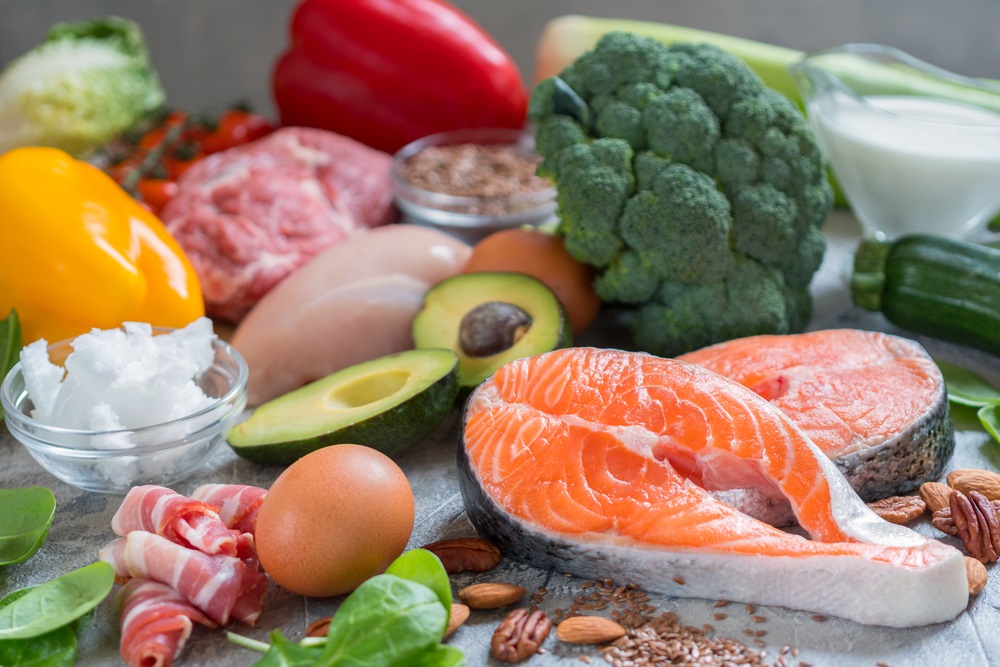
Protein intake remains normal and comes via good meat (from animals raised outdoors) or fatty fish such as sardines, mackerel or salmon or even eggs. If it is not prohibited, processed meat (cold meats, certain sausages, etc.) is not recommended. On the one hand because it often contains hidden sugars, and on the other hand because it belongs to the category of ultra-processed foods.
Since this diet is very restrictive and requires a lot of discipline, it is probably not for everyone, even if it works. The New Atkins Diet is more accessible (even if its start-up phase is very close to the ketogenic diet).
This diet may have contraindications, so it is always better to seek advice from a health professional before adopting it. It can cause undesirable effects (increased risk of kidney stones for example), an increased risk of certain disorders in the event of an existing metabolic disease. Follow-up with a dietician or doctor is therefore strongly recommended.
If you are diabetic or have fatty liver disease (NAFLD), this diet can greatly help you reverse your disease, but only under the supervision of a healthcare professional.
For more details: Ketogenic Diet Starter Kit
How to do a ketogenic diet? A standard menu
Morning :
- Bulletproof coffee (coffee with coconut oil and/or butter)
- Cheese Omelet
Noon :
- Seasoned green salad (avoid balsamic vinegar but use plenty of oil)
- Ground steak with 15% fat
- Green vegetable curry
- Plain Greek yogurt
Snack :
- 3 to 4 Brazil nuts
- Sugar-free tea
Dinner :
- Mushroom-mascarpone soup
- Veal blanquette
- 1 square of 90% dark chocolate
More menus and recipes in these ketogenic diet books:
- The great book of ketogenic diet
- Keto Cuisine
- 30 keto plates
- Simply Keto
- 50 shades of fat