
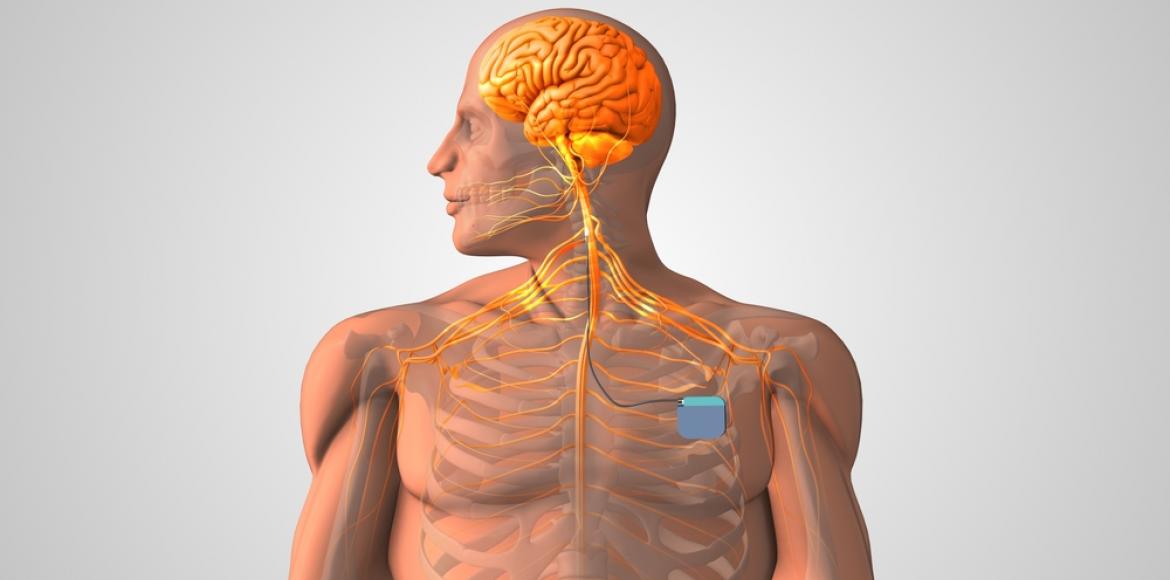
Although stimulation of the vagus nerve can help treat severe depression, the devices have not yet been widely deployed. Experiments are underway in France.
Vagus nerve stimulation therapy involves implanting a device resembling a pacemaker under the skin of the chest, with a wire connected to the left vagus nerve in the neck. The device delivers stimulation to the nerve, which in turn sends electrical impulses to areas of the brain associated with mood regulation.
A vagus nerve stimulation device was approved by the Food and Drug Administration (FDA) almost two decades ago for the treatment of resistant depression. This device is not widely used, particularly because of its cost.
Despite several clinical studies attesting to its favorable benefit-risk ratio, stimulation of the vagus nerve has not yet found its place in the management of resistant depression. This is particularly true in France, where only a limited number of implantations have taken place in this indication, as doctors from the APHP explain in a recent article (1).
In France, a clinical trial, DepVNS, coordinated by Professor Philippe Domenech at APHP, is currently underway to determine whether it would be interesting for this therapy to be reimbursed by health insurance (see box and video).
The DepVNS trial in France
The aim of this trial is to test vagus nerve stimulation in resistant depression. It is planned to include more than a hundred patients with resistant depression – that is to say difficult to stabilize with medical treatment – in several healthcare establishments spread throughout France. The objective of DepVNS is to analyze the cost-utility ratio of vagus nerve stimulation combined with medical treatment, compared to optimal medical treatment alone.
Recently, the Washington University School of Medicine in St. Louis published the results of a clinical trial conducted on nearly 500 patients suffering from severe treatment-resistant depression (2).
A full year clinical trial
In this study, 493 people were implanted with a device that stimulates the left vagus nerve and approximately half (249) of the devices were activated during the 12-month monitoring period. The other half of the participants, although receiving the devices, did not have vagus nerve stimulation.
The first two months of the 12-month trial period were spent adjusting the electrical parameters of the devices to each patient. Beginning in the third month, researchers obtained monthly ratings of participants’ depressive symptoms. Patients also rated their quality of life and their ability to perform daily living tasks.
At the start of the study, three-quarters of the participants were so affected by their illness that they were unable to work. “On average, each patient had already tried 13 treatments that failed to help them before participating in the trial, and they had spent more than half their life suffering from depression”explained in a press release Charles Conway, professor of psychiatry and principal investigator of this trial called RECOVER (3). Participants who were already receiving treatment for depression were encouraged to continue it during the trial.
An improvement in the quality of life of depressed patients
The results show that there are benefits to using the device. Complete remission was rare and did not differ between groups, but people with activated devices reported significant improvement in their quality of life and functional abilities.
Patients say their lives are improving
“What’s really important here is that patients themselves report that their lives are improving”said Charles Conway. “This is a population of people who have had a high number of failed treatments, including very aggressive treatments like electroconvulsive therapy. And these people aren’t just saying, ‘Yeah, I feel a little better.'” He adds: “The nice thing about vagus nerve stimulation, we know from other studies, is that when the patient responds, the effects are usually sustained.”
Read: 4 simple and effective tips to stimulate the vagus nerve (subscribers)
Most improvements were only seen in the last three months of the trial, showing that benefits come slowly during the first year of treatment.
At the end of the year, devices that had been deactivated during the 12-month monitoring period were turned back on. The extinct group reported greater improvement than expected, particularly in recent weeks. But all participants knew the devices would be activated at the end of the year, which may have affected those in the control group who knew potential relief was coming, Charles Conway suggests.
To learn more about the vagus nerve: Super vagus nerve
-
References
-
Historical
-
Senova et al. Stimulation of the vagus nerve in the treatment of depression. The medical press. 2019.
-
Conway et al. Vagus nerve stimulation in treatment-resistant depression: A one-year, randomized, sham-controlled trial. Brain Stimulation. 2024.
-
WashU Medicine. Vagus nerve stimulation relieves severe depression. Press release. December 18, 2024.
-
Current version
on 03/20/2025 - 02/25/2025