
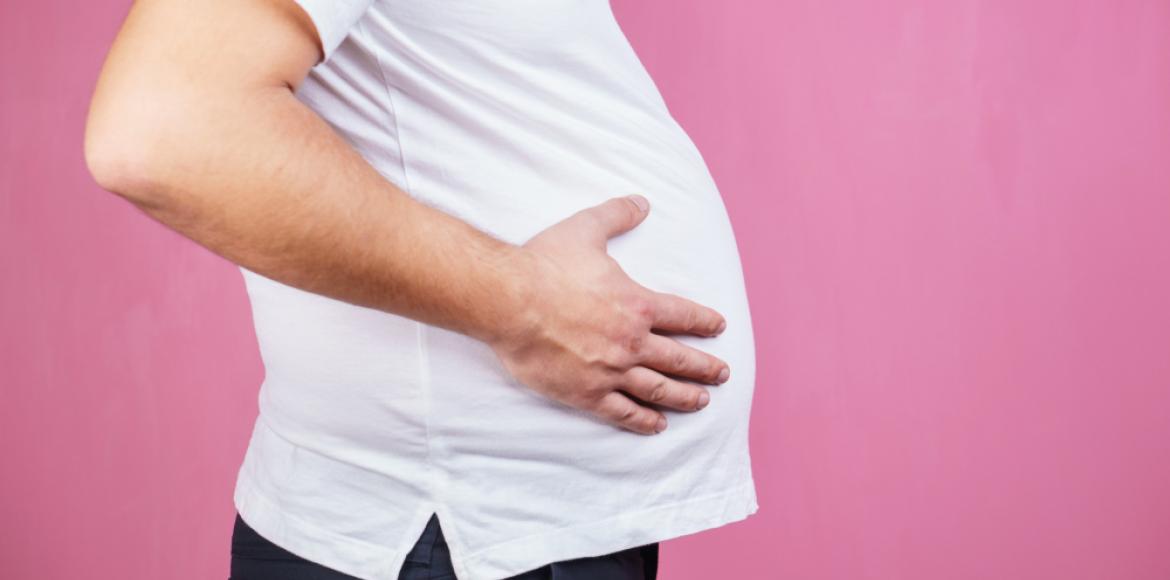
Leptin is a hormone produced by adipose tissue to signal the brain to stop eating. But it does not properly fulfill its role in overweight or obese people who develop resistance. Explanations with Professor Benjamin Bikman.
Leptin, the satiety hormone
Leptin is a peptide hormone produced primarily by white adipose tissue. When the amount of fat increases in the body, leptin levels also rise. People who are overweight or obese have higher levels of leptin.
Leptin secretion is influenced by several factors, listed by Professor Bikman, author of the book Insulin resistancein the video below:
- insulinwhich is the main stimulant of leptin production by adipose tissue;
- inflammationwhich also increases leptin: TNF-alphaa pro-inflammatory cytokine, stimulates leptin production by adipocytes. But when a fat cell grows, “it releases more and more TNF-alpha, explains Professor Bikman. TNF-alpha acts on the fat cell that has just produced it, and releases more leptin” ;
- certain steroid hormones in women: estradiol (the main estrogen) and cortisol. “Estradiol has a stimulating effect by inducing fat cells to release more leptin,” said Ben Bikman. It is the same with cortisol, but, for Ben Bikman, its role is exaggerated on social networks.
Actions of leptin
Leptin and metabolism
Leptin’s most famous effect is appetite suppression. The hormone acts on the hypothalamus to activate satiety signals and encourage the individual to eat less. But leptin has other roles. “It promotes mitochondrial biogenesis: it stimulates the production of new mitochondria, particularly in tissues rich in mitochondria such as muscle cells. »
The discovery of leptin
In 1994, the laboratory of Jeffrey Friedman (Rockefeller University) discovered this hormone and its essential role in mice. Researchers noticed that some very fat mice lacked a hormone that was present in skinny animals. They extracted this hormone and observed that if they injected it into these obese animals, they lost weight. Dr. Friedman named this “slimming hormone” leptin, from the Greek word leptoswhich means “thin”.
A hormone essential to fertility
Leptin also acts on the brain and on GnRH which influences the secretions of the hormones LH and FSH. “If there is no leptin in a body, there is no fertilitysays Professor Bikman. It is essential for normal fertility. » This could also explain why the female body is so sensitive to leptin. Indeed, for a woman to be able to start a pregnancy, the body must ensure that its metabolism can support it, and provide enough energy for the growth of the fetus. “Having enough adipose tissue is metabolic insurancesays Ben Bikman. If there are enough fat cells, there will be enough leptin, which signals the brain that fertility is ready. » Conversely, if a woman is too thin, there is not enough fatty tissue to produce leptin and signal the brain to approve fertility.
Other functions of leptin
Leptin also influences:
- TSH, which will have an effect on the production of thyroid hormones ;
- immune responses and inflammation;
- vascular healthby acting on the production of nitric oxide (NO), which is a vasodilator. NO reduces blood pressure and therefore cardiovascular risk;
- insulin : leptin inhibits insulin secretion. As insulin stimulates leptin production, this creates a negative feedback from leptin to insulin.
Leptin resistance
Following Jeffrey Friedman’s discoveries showing that leptin made obese mice lose weight, researchers carried out clinical trials to see if it could be transposed to humans, but this was unsuccessful: leptin injections do not make overweight or obese people lose weight. For what ? “This is because the average overweight or obese person has very high levels of leptin,” explains Ben Bikman. This is because the hormone is produced by fat cells. “So injecting leptin is useless!” » But then why do these people become obese given that they have enough “slimming hormone”? Because they develop resistance to leptin: the body no longer responds to leptin.
However, for Ben Bikman, it is not leptin or leptin resistance that increases obesity, “It is always insulin that is responsible for the direct growth of the fat cell. » Of course diet influences weight, but, for Ben Bikman, hormones are more important than the number of calories. He demonstrates this in the video by citing experiments carried out on animals: if we take normal animals and leptin mutants subjected to the same diet, then the leptin mutant animals become obese, even when consuming the same number of calories as the others.
Read: Hormones and weight: what diet to get back in shape? (subscribers)
The causes of resistance
For Ben Bikman, the main cause of leptin resistance is leptin itself: too much leptin leads to leptin resistance. Another cause is inflammation: C-reactive protein, which is a marker of inflammation, contributes to leptin resistance.
A consequence of leptin resistance: hyperinsulinemia
When leptin functions poorly, the individual has more difficulty controlling their appetite and energy expenditure is reduced. There is also less signal to stop insulin, which contributes to high insulin levels and insulin resistance. Added to this picture are problems affecting other organs: in the event of leptin resistance, the blood vessels are more contracted, which promotes cardiovascular problems; immune, reproductive and bone functions are compromised. But Professor Bikman insists: “It is not the absence of leptin that contributes to obesity, nor leptin resistance. It is hyperinsulinemia that stimulates the growth of fat cells. »
In practice
“If you are overweight or obese, it is likely that you have leptin resistance,” said Ben Bikman. To lower leptin, one of the keys is to control blood sugar, to lower insulin and thus eliminate a stimulating signal from leptin. In the video, Professor Bikman notably cites a study in which women were separated into two groups, following either a low-fat diet or a low-carbohydrate ketogenic diet. The latter diet led to decreases in high leptin levels in women.
It is therefore necessary to reduce the carbohydrates entering the body, to reduce its insulin. “As insulin decreases, leptin will also decrease,” he concludes.
To go further, read Dr. Ben Bikman’s book: Insulin resistance
-
Historical
-
Current version
04/15/2025 - on 04/11/2025
- on 02/04/2025
- 01/29/2025