
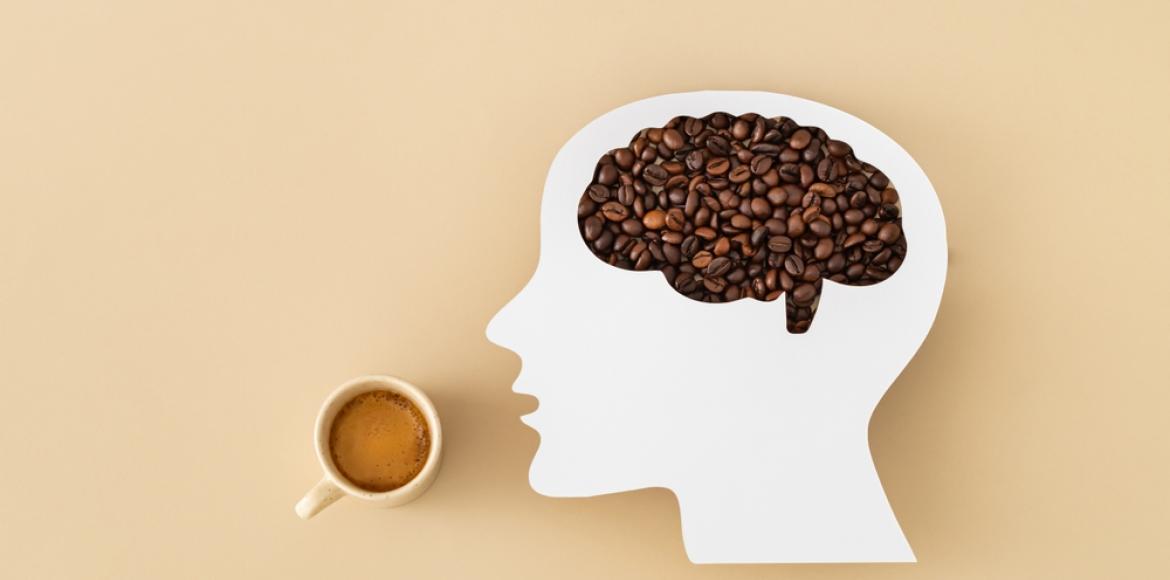
The second most consumed drink in the world after water, coffee has a very real effect on the brain, thanks to caffeine. Recent studies suggest that two to three cups a day may also reduce the risk of dementia and mood disorders.
The stimulating effect of coffee comes largely from the way caffeine acts on adenosine receptors in the neuronal membrane.
How Cefeine Stimulates the Brain
Adenosine is a central nervous system neuromodulator that has specific receptors. When adenosine binds to its receptors, neuronal activity slows, and you feel sleepy. Adenosine therefore facilitates sleep and dilates blood vessels, probably to ensure good oxygenation during sleep.
Caffeine acts as an adenosine receptor antagonist. This means that it binds to these receptors and prevents adenosine from lodging there and playing its role as a “brake”. The activity of neurons is accelerated. The activation of numerous neuronal circuits by caffeine also causes the pituitary gland to secrete hormones that instruct the adrenal glands to produce more adrenaline, which is a stress hormone.
Adrenaline is a “fight or flight hormone,” so it increases your attention span and gives your nervous system as a whole an extra boost of energy. This is exactly the effect coffee drinkers are looking for. In general, each cup of coffee has a certain stimulating effect. This effect can last for several hours and adrenaline and other stress markers can remain high until the end of the day, even with a little coffee in the morning.
Read: Coffee, how to choose and prepare it
Addiction, dopamine and depression
Caffeine can be physically addictive. Caffeine withdrawal symptoms appear 24 to 48 hours after stopping chronic consumption. It mainly involves headaches, nausea and drowsiness and affects approximately one in two people.
This dependence is explained by the fact that caffeine increases the production of dopamine in the brain’s pleasure circuits. But the increase in dopamine could also explain why studies have found that coffee consumption is associated with a reduced risk of depression.
Two to three coffees per day to reduce anxiety and depression
Recent results suggest that coffee protects against depression. This study published in 2026, carried out by researchers from Fudan University (China), analyzed data from 461,586 people in good mental health, followed for more than 13 years within the British UK Biobank cohort.
The study in brief
461,586 participants, average age 56.6 years
Median follow-up of 13.4 years
18,220 cases of mood disorders and 18,547 cases of stress disorders recorded
Published in Journal of Affective Disorders2026
People drinking two to three cups a day had the lowest risk of developing mood or stress-related disorders. This association drew a J curve: beyond five cups, the risk increased. The study also found stronger effects in men than in women.
The anti-inflammatory effects of caffeine and other coffee compounds such as chlorogenic acid could explain the observed reduction in risk.
Less dementia with two to three cups a day
The neuroprotective effects of coffee extend well beyond the short term. A large study published in February 2026 in JAMA, conducted by researchers at Mass General Brigham, Harvard and the Broad Institute of MIT, followed more than 131,000 participants for up to 43 years.
The study in brief
131,821 participants (nurses and health professionals)
Follow-up up to 43 years
11,033 cases of dementia recorded
Published in JAMAFebruary 2026
Result: consumption of two to three cups of caffeinated coffee per day was associated with an 18% lower risk of dementia compared to people who consumed little or no coffee. Coffee drinkers also had a lower prevalence of subjective cognitive decline (7.8% versus 9.5%) and better performance on objective cognitive tests.
One to two cups of tea per day produced comparable effects. In contrast, decaffeinated coffee showed no similar benefits, pointing to caffeine as the primary neuroprotective agent. The study also showed that the benefits were similar in people at high and low genetic risk of dementia.
“Our results are encouraging, but it is important to keep in mind that the effect size is modest and there are many other ways to protect cognitive function as we age.”underlined Dr Daniel Wang, one of the authors of the study in a press release.
To remember
- Moderate coffee consumption — around two to three cups per day — seems beneficial for the brain, both in the short term (alertness, cognition) and in the long term (reduced risk of dementia and mood disorders).
- There caffeine appears to be the main actor of these neuroprotective effects, without being the only one.
- THE polyphenols such as chlorogenic acid and other bioactive compounds in coffee could contribute to the observed benefits on mental health.
To go further: Nourish your brain, heal your mind
-
References
-
Historical
-
Canadian Institute for Neuroscience, McGill University, Montreal.
-
Song et al. Daily coffee drinking and mental health outcomes: Sex differences and the role of caffeine metabolism genotypes. Journal of Affective Disorders. 2026.
-
Zhang et al. Coffee and Tea Intake, Dementia Risk, and Cognitive Function. JAMA. February 9, 2026.
-
Current version
04/28/2026 - on 09/30/2011