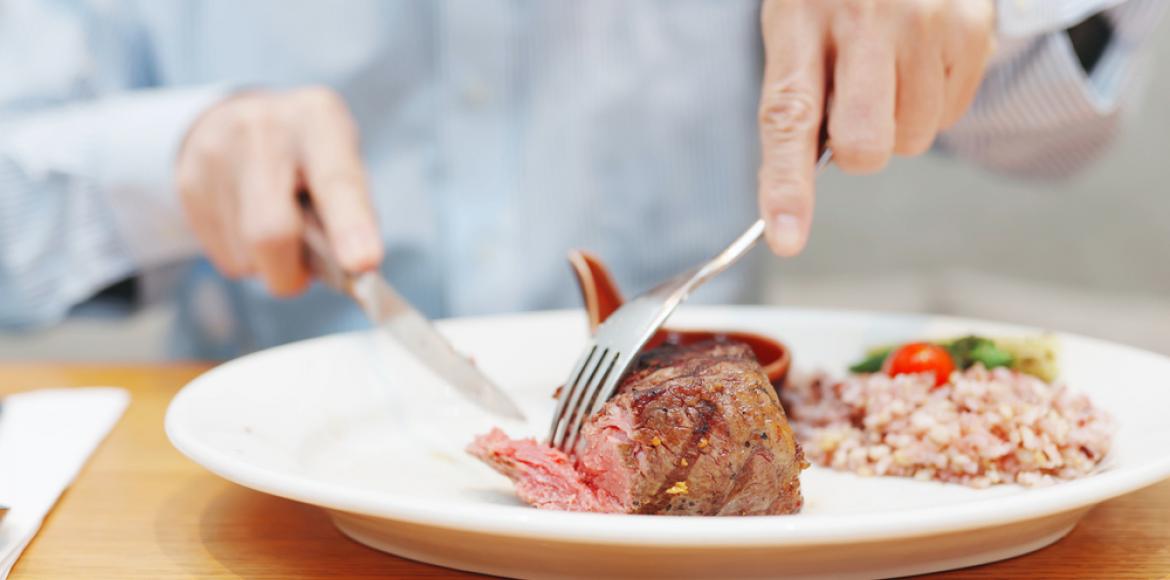
According to a recent Chinese study, meat eaters are more likely to become centenarians than vegetarians. What should we think about it?
What the Chinese study says
Carried out by researchers from Fudan University in Shanghai, this research is based on the Chinese Longitudinal Healthy Longevity Surveya national cohort that has existed since 1998. The analysis included 5,203 adults aged 80 or older, including 1,459 centenarians (who reached age 100 before 2018), compared to 3,744 non-centenarians who died before this age (1).
Result: vegetarians as a whole were 19% less likely to become centenarians compared to omnivores. Among strict vegans, the gap rose to 29%. On the other hand, pesco-vegetarians (who consume fish) and ovo-lacto-vegetarians did not present a statistically significant difference with meat eaters.
Results to be qualified
On the surface, these results contradict the idea that plant-rich diets are healthier. But on the site The ConversationChloé Casey, lecturer in nutrition at Bournemouth University, qualified these results (2). According to her, the association was only statistically robust in underweight people (BMI less than 18.5). In those with normal or greater weight, the link virtually disappeared. It is therefore especially for very thin elderly people that the absence of meat is penalizing.
In addition, the study focused on adults aged 80 and over, including “nutritional needs differ significantly from those of younger people.” Finally, the study is observational and therefore does not demonstrate the cause and effect link.
For Chloe Casey, “Rather than figuring out which diet is universally better than another, the essential message is that nutrition should be tailored to your stage of life. » This is not a plea for meat but rather a call for nutritional personalization according to age.
The key message is that nutrition should be tailored to your life stage
Why Animal Protein Matters After Age 80
The interest of the study is to highlight, among older people, the risk of malnutrition and sarcopenia, which are a threat to autonomy and survival. “In the final stages of life, nutritional priorities changeexplains Chloe Casey. Rather than preventing long-term disease, the goal becomes maintaining muscle mass, preventing weight loss, and ensuring that every bite provides maximum nutrients. » However, proteins of animal origin have greater bioavailability than plant proteins.
What the Blue Zones teach us
To place these data in a broader context, we can also look at the populations which concentrate the most centenarians in the world: the famous Blue Zones (Okinawa in Japan, Sardinia in Italy, Ikaria in Greece, Nicoya in Costa Rica). Their diet gives pride of place to plants, with animal products consumed in small quantities, even if they are not vegetarian diets.
Read: The secrets of the blue zones (subscribers)
In Ikaria and Sardinia, the Mediterranean diet dominates: vegetables, legumes, olive oil, fish, and white meat in moderation. The Mediterranean diet limits red meat, while promoting other sources of protein such as fish, eggs and legumes.
In conclusion, the Chinese study above all highlights the protective role of animal proteins in very old and/or undernourished people.
To go further: Muscles, your greatest life force
-
References
-
Historical
-
Li et al. Vegetarian diet and likelihood of becoming centenarians in Chinese adults aged 80 y or older: a nested case-control study. The American Journal of Clinical Nutrition. February 2026.
-
Casey C. Are meat eaters really more likely to live to 100 than non-meat eaters, as a recent study suggests? The Conversation. January 2026.
-
Buettner D. The Blue Zones. National Geographic. 2009.
- on 05/11/2026