
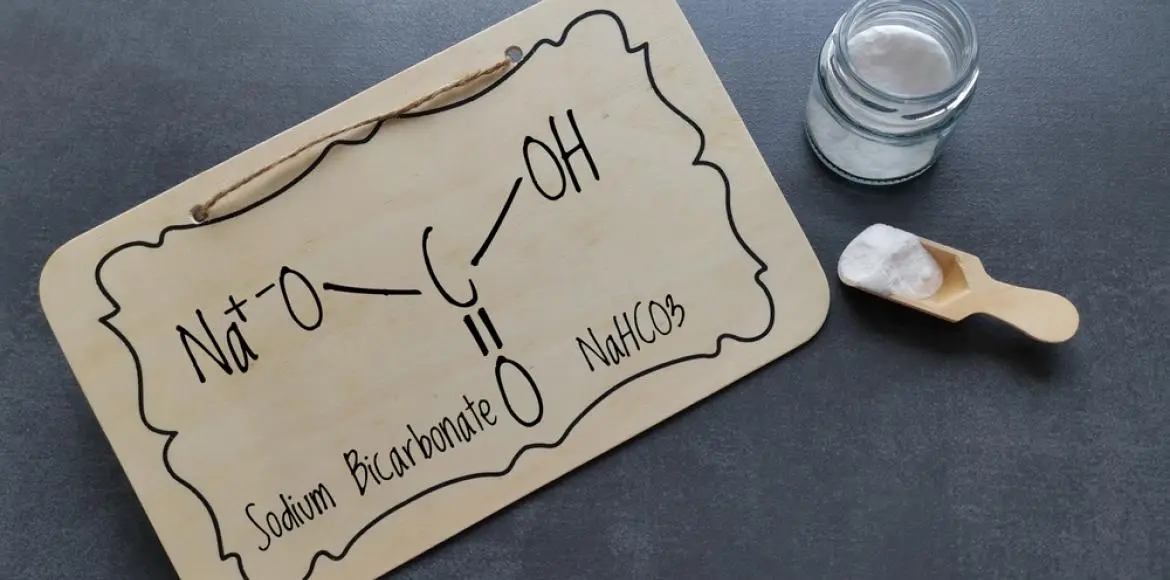
Bicarbonates are used by some athletes to limit acidosis due to exercise and improve performance. Does this work? With insight from Fabrice Kuhn, sports doctor.
Last July, an article from The Team was closely interested in a food supplement particularly appreciated by middle-distance runners, containing bicarbonates: the Bicarb System from Maurten. “Since last summer, French long-distance runners, and in particular 800m runners, have been using this “fuel for advanced athletes” to delay the arrival of lactic acid and try to finish races better,” explains article (1).
Maurten’s Bicarb System contains carbohydrates (fructose, modified starch, maltodextrin) and bicarbonates, and comes in the form of a gel. Other bicarbonates for athletes are sold in capsules. What do you think and how do they work?
The principle of bicarbonates for sport
In a healthy person, the pH of the blood is very stable, at a value of 7.40 for arterial blood, that is to say slightly alkaline. When the pH is lower than 7.35, we speak of acidemia and if it is higher than 7.45 it is alkalemia. To maintain its pH within these very narrow limits and maintain good cellular functioning, the body has regulatory systems, buffer systems, particularly in the blood, which instantly neutralize excess acidity.
However, physical exercise produces acidity. But contrary to popular belief, this acidity is not due to the production of lactic acid (lactates) by the muscles, as explained by Dr. Fabrice Kuhn, author of The science of endurance (2): “We need to remove this idea that lactates produce acidity, that’s not true. Acidity is produced during intense efforts but not because of lactates. »
This acidity limits effort, which explains why athletes seek to avoid it by using bicarbonates, which are alkalizing: “The benefit of bicarbonates is to buffer the acidity that is produced during exercise, said Fabrice Kuhn. It is used for intense efforts, lasting less than two minutes,” for example in track cycling or running. “This can help buffer acidity during sprints. » This supplement is therefore not suitable for long-term endurance events.
Read: Reduce the body’s acidity: diet and supplements (subscribers)
Maurten: a supplement in gel form at a great price
The originality of the supplement proposed by Maurten is in its presentation, since it includes two elements: sodium bicarbonates to mix with a hydrogel. “Initially it was created for an exercise drink, which made it possible to coat the carbohydrates of the drink in this gel, to hide the carbohydrates in the stomach and to cross the intestinal barrier more easily”explains Fabrice Kuhn. Indeed, when we give the stomach too many carbohydrates at once, it tends to “shut down”. Here, the carbohydrates are “hidden” in the gel and would pass through better.
In this form, according to the manufacturer’s communication, the gel would allow better digestibility and the bicarbonates would not generate as many gastrointestinal disorders, bicarbonates being generally poorly tolerated at the intestinal level. But the firm has not provided proof that it works and its products are particularly expensive.
Bicarbonates and sports performance
Beyond the specific case of the supplement cited above, bicarbonates have been more widely studied for their benefit in sport. In 2021, members of the International Society of Sports Nutrition issued a document summarizing their effects on sports performance (3). Here are their conclusions:
- there sodium bicarbonate supplementation (doses of 0.2 to 0.5 g/kg) improves performance in muscular endurance activities, in various combat sports, including boxing, judo, karate, taekwondo and wrestling, as well as in high-intensity cycling, running, swimming and rowing;
- the effects are mainly established for high-intensity exercises that last between 30 s and 12 min ;
- sodium bicarbonate improves exercise performance in both men and women ;
- For single dose supplementation protocols, 0.2 g/kg of sodium bicarbonate appears to be the minimum dose required to achieve improvement in exercise performance, the optimal dose appears to be 0.3g/kg. Higher doses do not provide additional benefits and are associated with a higher incidence and greater severity of adverse effects;
- For single-dose supplementation protocols, the recommended timing for sodium bicarbonate ingestion is between 60 and 180 minutes before exercise or competition ;
- sodium bicarbonate supplementation protocols over several days can be effective in improving exercise performance. The duration of these protocols is generally between 3 and 7 days before the exercise test. The total daily dose is usually divided into smaller doses, ingested at several times throughout the day. The advantage of multi-day protocols is that they can help reduce the risk of sodium bicarbonate-induced side effects on the day of competition;
- long-term use of sodium bicarbonate (e.g., before each workout) may improve training adaptations;
- THE side effects The most common symptoms of sodium bicarbonate supplementation are bloating, nausea, vomiting, and abdominal pain. In the event of side effects, it is advisable to reduce the doses;
- sodium bicarbonate improves exercise performance, mainly through a series of physiological effects but also partly because of a placebo effect.
To go further: Endurance nutrition
-
References
-
Historical
-
Givers. “Maybe the thing that will allow you to scrape a place”, the middle distance runners fuel bicarbonates. The Team. July 11, 2024.
-
Kuhn. Endurance science. Editions Thierry Souccar. 2023.
-
Grgic et al. International Society of Sports Nutrition position stand: sodium bicarbonate and exercise performance. J Int Soc Sports Nutr. 2021
-
Current version
on 02/13/2026 - on 01/17/2025
- 09/25/2024
- on 08/08/2024