
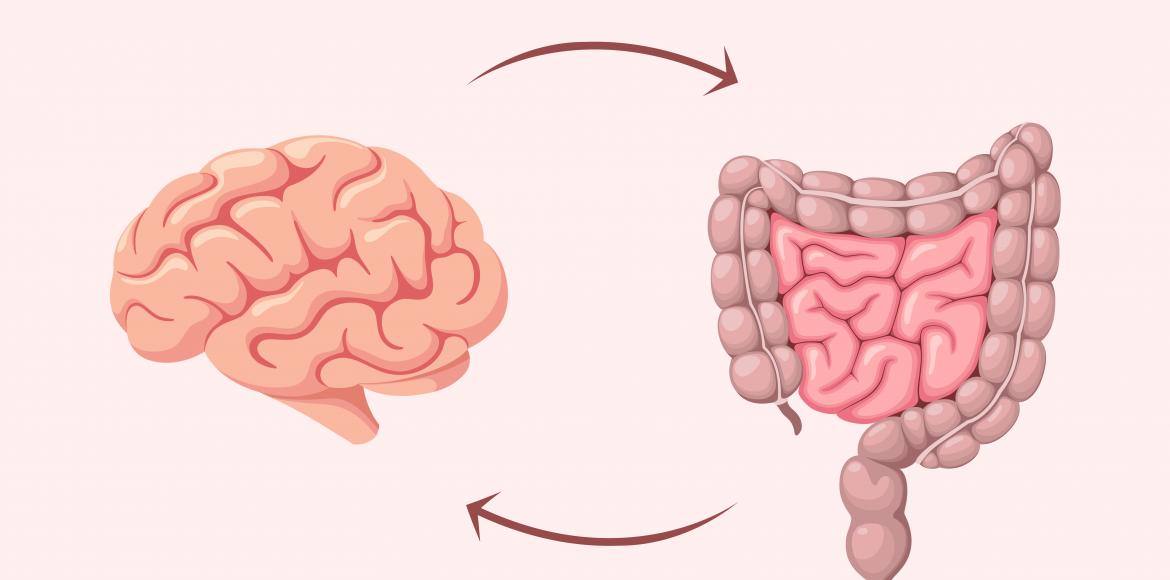
Did you think you were leading your life through your will and your personal aspirations? Nay! The micro-organisms that inhabit your digestive tract influence you much more than you thought.
In his book, The gut-brain axisDr. Steven Gundry demonstrates through numerous examples the power of the microbiota over our thoughts, our metabolism and our health. Here are four concrete examples.
1. Your microbiota can make you gain weight
Diet and exercise are not the only factors that determine our weight: the microbiota also plays a role. Steven Gundry relates in his book the very strange experience lived by a woman who underwent a microbiota transplant. To treat an infection Clostridium difficile resistant to treatment, she received a fecal microbiota transplant from an overweight donor. “Before the transplant, the patient’s weight was stable at 62 kg. Sixteen months later, she had gained 15 kg, reaching 77 kg”says Steven Gundry. However, she had not changed her diet in any way! “Even after following a liquid diet and a medically supervised exercise program, she continued to gain weight. Three years after the transplant, this patient weighed 80 kg. »
How to explain it? Some bacteria are known to be “obesogenic”, others to be better for the figure.
For example, Bacteroides fragiliswhich consumes saturated fats: “When you have a lot of these bacteria, they send messages to your brain telling you to eat more saturated fats so they can continue to grow. » Result: the consumption of saturated fats leads to an increasingly significant imbalance of the microbiota, an increase in intestinal hyperpermeability and weight gain. “At the same time, the increasing abundance of B. fragilis sends more and more signals to your brain, telling you to eat more saturated fats! »
Conversely, the bacteria Akkermansia muciniphila is beneficial to the barrier function of the intestine and may reduce the risk of obesity (1) .
Read: Gut bacteria makes us eat what suits them
2. The microbiome can make you depressed
As we have just seen, a fecal transplant sometimes gives surprising results, when certain characteristics of the donor are transmitted in an unexpected way to the recipient. And this also seems true for parameters other than weight. Thus, a meta-analysis published in 2020, including 21 studies, showed a reduction in depressive and anxiety-type symptoms and behaviors following the transplantation of a healthy microbiota (2). But the opposite has also been observed: we can transmit depressive and anxious behaviors by transferring the microbiota from donors with psychiatric disorders!
The proof is that many probiotics are developed to improve mood: these are psychobiotics. “Probiotics may help regulate serotonin levels and reduce inflammation, leading to fewer symptoms of depression”comments Steven Gundry.
3. Your microbiota builds your character
Our personality is partly shaped by the bacteria that inhabit our intestine. Dr. Gundry gives several examples: “Adults with a high relative abundance of bacteria called Gammaproteobacteria tend to be more neurotic than others, while people with a high relative abundance of butyrate-producing bacteria tend to be more conscientious! In addition, bacterial diversity in general, a sign of healthy soil, is associated with an open and pleasant personality. »
The gut has several ways of influencing the brain, including through the vagus nerve: Bacteria produce molecules called postbiotics that can travel from the gut to the brain via the vagus nerve. The vagus nerve thus allows our “intestinal companions” to send messages to the brain, as if by means of a telephone wire.
Read also: Postbiotics: a treasure in the waste (subscribers)
4. Your microbiota makes you addicted
Dependence on alcohol, tobacco, sugar, opioids… What if it was a microbiota problem? Dr. Steven Gundry devotes a chapter of his book to this theme: The microbiota at the origin of addictions. For example, the microbiota of people who have consumed alcohol excessively for more than ten years have more pro-inflammatory bacteria and fewer beneficial bacteria, including certain short-chain fatty acid (SCFA)-producing species. Overconsumption of alcohol causes an imbalance of the microbiota, intestinal porosity and activation of the immune system, leading to inflammation.
“Alcohol abuse modifies the microbiota and accentuates intestinal hyperpermeability, in a movement of mutual aggravationexplains Dr. Gundry. This inflammation also leads to changes directly in the brain. » It’s a harmful vicious circle: “This leads to neurodegeneration as well as an increased desire to consume alcohol. »