Women of childbearing age and children are the populations most commonly affected by anemia worldwide. But where can you find iron in your food? Meats, meats, legumes… We take stock.
In the body, iron is best known for its presence in hemoglobin, the pigment in red blood cells that allows the transport of oxygen throughout the body. Iron also participates in the constitution of myoglobin, which is a form of oxygen reserve in the muscle. In the body’s cells, iron acts as a cofactor for enzymes involved in numerous metabolic reactions such as the synthesis and degradation of amino acids and proteins. Iron also participates in the transport of electrons at the mitochondrial level, in the metabolism of catecholamines, in the synthesis of DNA, etc.
Signs of iron deficiency
Iron deficiency anemia is often asymptomatic, but severe, it can lead to fatigue, paleness, headaches, difficulty concentrating, and dizziness. It is a blood test, measuring in particular hemoglobin, ferritin and red blood cells, which allows the diagnosis to be made.
Globally, approximately 40% of children aged 6 months to 5 years, 37% of pregnant women and 30% of women aged 15 to 49 years are affected by anemiaaccording to the WHO. The populations most at risk are those whose iron needs are high due to growth (children, pregnant women) and losses (women with heavy menstrual losses, pathologies).
In France, iron deficiency anemia remains uncommon, but iron deficiency is much more common. “In France, nearly a quarter of women of childbearing age have complete depletion of iron reserves.explains Sara Dadoun, doctor at Armand-Trousseau hospital. Various studies have shown the absence of iron reserves in a significant fraction of the population, particularly in young children, adolescents and women of childbearing age. In a study carried out in Val-de-Marne, 29% of children under two years old, 14% of young people aged two to six years old, 15% of adolescent girls and 10% of women of childbearing age had an iron deficiency. »
Nutritional References for the Population (RNP)
For ANSES, adult men and women need 11 mg of iron per day, except pregnant, breastfeeding women or women with significant losses during menstruation who need 16 mg per day.
Iron intake and the risks of excess
In food, iron is present in heme form, in animal products (meat, offal, fish, seafood), and in non-heme form (or metallic iron), in animal and plant products. Heme iron is better absorbed than metallic iron, but there is a risk of consuming too much animal iron, as explained in The best way to eat : “Iron, which can be an advantage for active women, children and adolescents, can also cause an overload of the body, especially when little is eliminated, which is the case for men and women after menopause. Excess iron is a source of free radicals. » Excess iron is associated in some studies with an increased risk of cancer, atherosclerosis, stroke and sudden death. According to a meta-analysis of 21 studies, consumption of heme iron, found in red meat, is linked to a 57% increased risk of coronary heart disease.
Food sources of iron
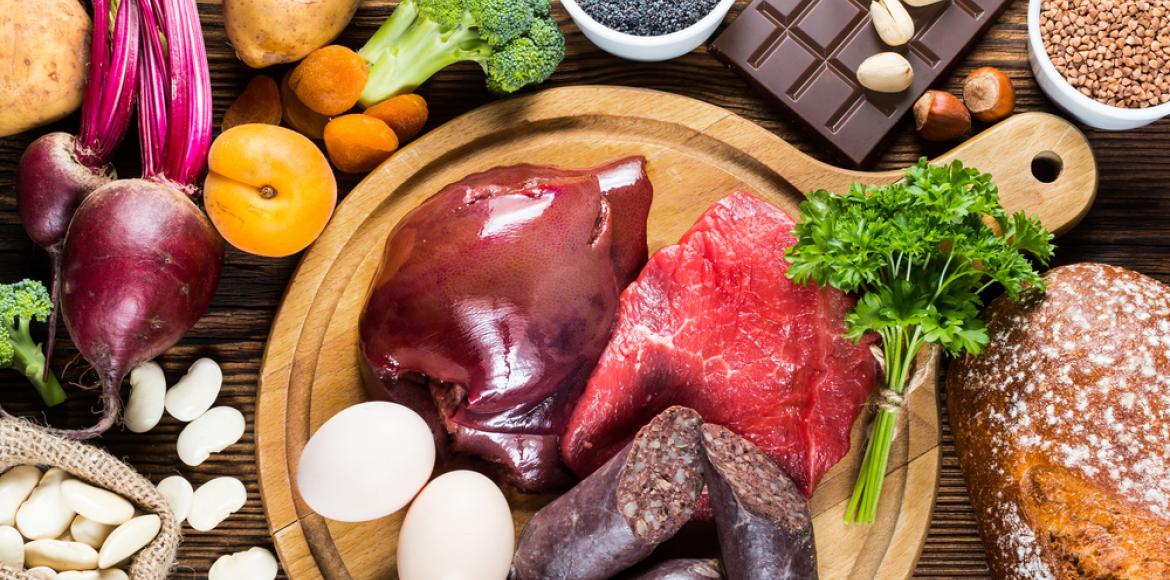
The main dietary sources of iron are liver, meats, fish and seafood, legumes, nuts, cereals, egg yolk and green leafy vegetables. Iron is indeed present in plant products as recalled by the authors of The best way to eat : “Vegetables provide iron, which is properly absorbed in the presence of vitamin C, which also explains why we do not find more anemia in vegetarian women than in those who are omnivores. »
For example, you will find your daily intake in 150 g of mussels or with: a portion of lentils + a portion of tofu + a portion of quinoa + 4 squares of dark chocolate (20 g) and a little almonds (see graph above).
Recipe ideas with legumes:
-
Vegetable and lentil soup
-
Summer lentil salad
-
Quinoa pilaf, tofu & fresh peas
-
Silken tofu spread
What to think about supplements?
Iron (like copper) is not recommended in multivitamin supplements because it can promote the formation of free radicals. In The vitamin guideThierry Souccar underlines: “If you have to take iron or copper, you must first carry out biological dosages to be sure that you are deficient, and take these nutrients in isolation, away from other minerals and vitamins. » Only your doctor can advise you on the advisability of iron supplementation.
To go further: The best way to eat
-
Historical
- on 07/03/2026