

The Mediterranean diet is recognized for its many benefits, particularly for cardiovascular health. But does such a diet help you lose weight?
What are the staple foods of the Mediterranean diet?
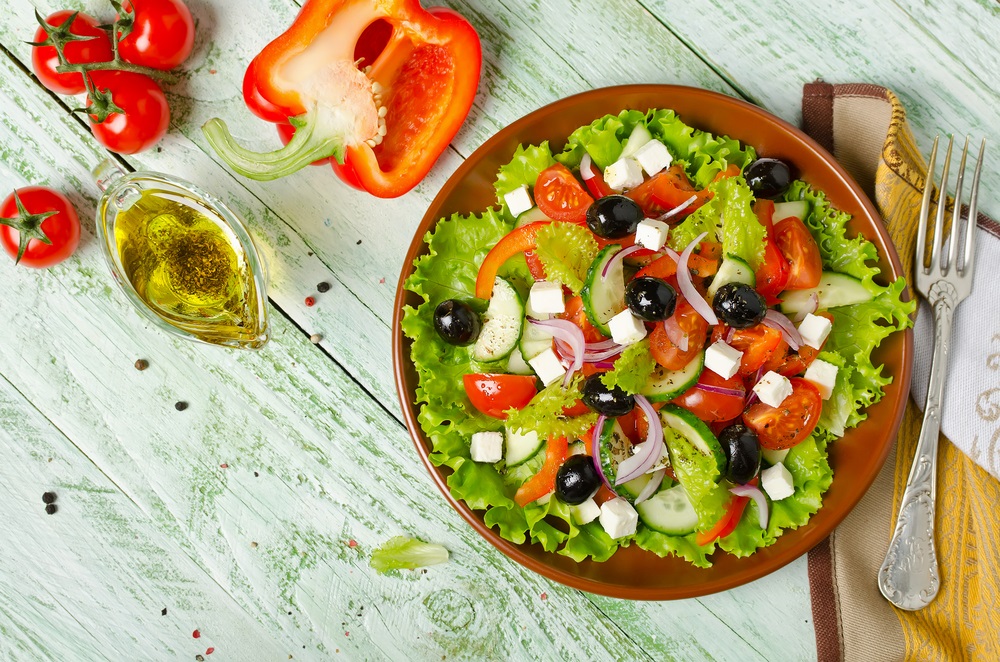
The Mediterranean diet, described since Antiquity, is based on the significant consumption of vegetables, fruits, nuts, whole grains, legumes, herbsand the more moderate one of meat, fatty fish and seafood, virgin olive oil. Red wine (in moderate doses) is generally present with meals, prepared at home. The Mediterranean diet is accompanied by a lifestyle that favors social connections, outdoor activities and which benefits from plenty of sunshine.
The Mediterranean diet pyramid
Cretan Diet vs Mediterranean Diet
The Cretan diet came to light in the 1950s when Ancel Keys, a public health professor in Minnesota, and his wife compared cardiovascular mortality over 15 years and the eating habits of 7 Western countries: the United States, Finland, the Netherlands, Yugoslavia, Italy, Japan, Greece. The results reveal that the mortality rate of Cretans is extremely low compared to that of Finns or Americans.
A few years later, the Lyon study followed 600 patients divided into two groups. If the two groups have the same drug treatment, the same is not true for diet. The control group will have a normal diet and the experimental group will be subjected to the Cretan diet. After 27 months, the experimental group experienced an 80% reduction in cardiac events with 8 deaths in the Cretan group compared to 20 in the control group. A conclusion was necessary:Cretan diet protects them from cardiovascular diseases.
The Mediterranean diet differs somewhat from that of the Cretans but uses the same principles. Although the Cretans have the custom of eating nettles, dandelions or amaranth leaves, this is not the case in all countries.
What weight loss with the Mediterranean diet?
Many health benefits of the Mediterranean diet have been highlighted, to reduce cognitive decline, metabolic syndrome, type 2 diabetes, cardiovascular diseases, etc. The advantages of this diet are attributed in part to the presence of good fats (olive oil, but also omega-3 fatty acids from oily fish), and antioxidants from fruits and vegetables.
In addition to its health benefits, the Mediterranean diet may be useful for reducing body weight and adiposity, particularly in the abdominal area, as shown in a meta-analysis of 16 clinical trials (1). However, weight loss remains modest unless caloric intake is reduced at the same time and/or physical activity is increased (see below).
The more you adhere to the Mediterranean diet, the less weight you gain over five years
The Mediterranean diet is in any case an asset to avoid weight gain. “We found that adherence to the Mediterranean diet reduces the risk of overweight and obesity. Moreover, the more you adhere to the Mediterranean diet, the less your weight gain over five years is significant” explain the authors of a large study published in 2022 (2).
Combining Mediterranean diet and exercise: winning combo
Following a Mediterranean diet and practicing regular physical activity helps you lose 3 to 4 kg on average against 1 to 2 kg in the absence of physical activity (3, 4). With the addition of calorie reduction, it is also a way to lose belly fat.
The Mediterranean diet to lose belly fat
In 2023, a study led by researcher Dora Romaguera from the Balearic Islands Health Research Institute included just over 1,500 people who were overweight or obese and had metabolic syndrome (5). A group of people followed a Mediterranean diet while reducing calories by 30% and increasing physical activity. They were also asked to limit their intake of processed foods, meats, butter, added sugar and to eat more whole grain products rather than refined ones. But the advice did not stop at diet: they were also encouraged to gradually increase their physical activity, with the aim of walk at least 45 minutes a day six days a weekas well as do bodybuilding exercises. A second group of people followed a Mediterranean diet without calorie restriction or changes in physical activity.
People who reduced their calories and exercised regularly while adhering to a Mediterranean diet partly lost their abdominal fat and total fatand retained most of this profit for three years. In contrast, people in the other group saw no change in abdominal fat.
Recipe ideas for a Mediterranean diet
What breakfast?
Here are two examples of breakfasts that can be part of a Mediterranean diet:
Breakfast 1
- Seasonal fruit
- Almonds, walnuts or hazelnuts
- Sourdough multigrain bread
- Light coffee or tea
Breakfast 2
- Fried egg cooked in olive oil
- Seed bread
- Light coffee or tea
Source : I eat Mediterranean every day
Meal ideas and menus
A vegetarian Mediterranean meal
- Green salad with beets in oil
- Zucchini and tomato omelette
- Sheep’s cheese and spelled bread
A meal with meat
- Pork tagine with quince
- Purslane salad with walnuts
- Fruit salad
A meal with seafood
- Endive salad with walnuts
- Cuttlefish in potato sauce
- Dried figs
According to I eat Mediterranean every day
Find Mediterranean recipes on our site:
-
Eggplant caviar
-
Artichokes with broad beans
-
Cretan cod
-
Chickpea croquettes (falafel)
-
Octopus in prison
-
Saint Basil Cake
Conclusion: our opinion on the Mediterranean diet for weight loss
The Mediterranean diet is not the most effective for weight loss. To increase its effectiveness, one can exercise and apply calorie restriction. More than a slimming diet, it is a health diet that can be implemented after weight loss in order to avoid gaining back extra pounds.
To go further, read: The 2024 list of slimming diets (subscribers)
-
References
-
Historical
-
Esposito et al. Mediterranean diet and weight loss: meta-analysis of randomized controlled trials. Metab Syndr Relat Disord. 2011.
-
Lotfi et al. Adherence to the Mediterranean Diet, Five-Year Weight Change, and Risk of Overweight and Obesity: A Systematic Review and Dose–Response Meta-Analysis of Prospective Cohort Studies. Advances in Nutrition. 2022.
-
Malakou et al. The Combined Effect of Promoting the Mediterranean Diet and Physical Activity on Metabolic Risk Factors in Adults: A Systematic Review and Meta-Analysis of Randomized Controlled Trials. Nutrients. 2018.
-
Papadaki et al. The Effect of the Mediterranean Diet on Metabolic Health: A Systematic Review and Meta-Analysis of Controlled Trials in Adults. Nutrients. 2020.
-
Konieczna et al. An Energy-Reduced Mediterranean Diet, Physical Activity, and Body Composition. JAMA Network Open. 2023.
-
Current version
04/24/2026 - on 04/21/2026
- on 03/17/2026
- 10/17/2024