
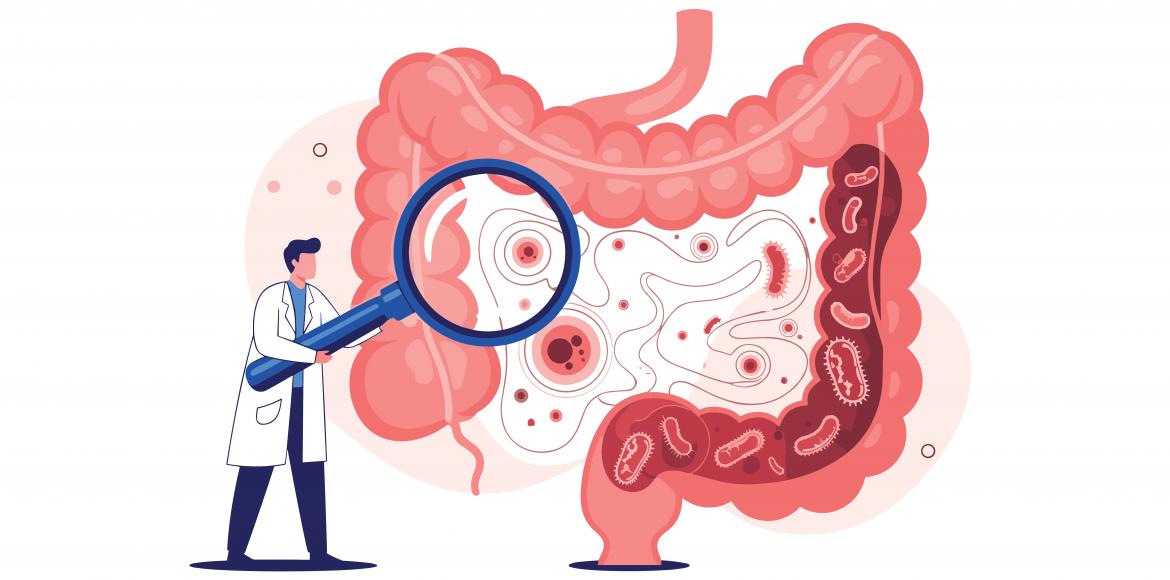
An international team involving INRAE has identified a specific signature of the intestinal microbiota in Parkinson’s disease. These results pave the way for early detection testing and suggest that diet could slow the progression of the disease.
A common neurodegenerative disease
Parkinson’s disease is the second most common neurodegenerative disease after Alzheimer’s disease, according to Public Health France. It mainly affects the elderly: the average age at the start of treatment is around 75, even if 15 to 20% of new patients are under 65. If aging remains the main risk factor, certain genetic predispositions also play a role: a quarter of patients carry mutations in a gene called GBA. But only 10% of these carriers develop the disease, suggesting that other factors, including environment and diet, are at play.
Today, diagnostic tests are long and expensive. It is impossible, in practice, to identify in advance the individuals most at risk in order to intervene before symptoms appear.
An innovative analysis method
An international team led by University College London, with the participation of the MetaGenoPolis laboratory of INRAE (Université Paris-Saclay), followed a cohort of 464 people in the United Kingdom and Italy: 271 patients with Parkinson’s, 43 individuals carrying genetic mutations without having developed the disease, and 150 people without a known predisposition.
The methodological novelty lies in the way of analyzing the microbiota. Classic approaches study microbial species one by one. Here, scientists looked for coordinated variations in several species simultaneously. Mathieu Almeida, research fellow at INRAE, explains: “This innovative method of analyzing the microbiota, by following all microbial species rather than each species individually, has made it possible to identify alterations specific to Parkinson’s disease. »
A signature of the microbiota linked to the stage of the disease
The analyzes revealed a characteristic signature: certain groups of microbial species become depleted in the microbiota of Parkinson’s patients, while others become enriched. Patients in the most advanced stages had alterations in their microbiota 15 times more severe than those in the early stages.
To validate the robustness of this discovery, the researchers then compared their results with data from three other cohorts of patients, in the United States, South Korea and Turkey. The same signature was present in all the countries studied, regardless of geographic origins and local eating habits.
A tool to identify people at risk
One result concerns individuals carrying genetic mutations but who have not (yet) developed the disease. Their microbiota already showed alterations similar to those of the patients, but to a lesser degree. Better yet: the 10% of them displaying the most significant alterations were also those whose clinical examination brought them closest to the diagnosis.
Same observation in people without known genetic predisposition: the 20% presenting the strongest alterations in the microbiota showed clinical signs compatible with an increased risk. In other words, the analysis of the microbiota could detect a Parkinson’s risk even before the appearance of motor symptoms. Professor Stanislav Dusko Ehrlich, from University College London, concludes: “Analysis of the intestinal microbiota makes it possible to identify individuals at risk of developing Parkinson’s disease and to offer them support and actions to reduce this risk, for example through diet. »
Analysis of the intestinal microbiota makes it possible to identify individuals at risk
Food, a lever for prevention
The study sheds additional light on the role of diet. Regardless of drug treatment, patients with a balanced diet had less marked alterations in the microbiota and less severe symptoms. Previous studies had already suggested that a diet close to the Mediterranean diet could delay the onset of the disease.
These observations do not yet make it possible to establish a direct causal relationship between diet and Parkinson’s risk. But they point towards a concrete avenue of prevention: taking care of your intestinal microbiota through a diet rich in fiber, polyphenols and fermented foods could help modulate the risk or slow the progression of the disease in people identified as vulnerable.
The next step will be to develop a diagnostic test that can be used in clinical practice, based on a simple fecal sample. Such a tool could transform the management of the disease: rather than waiting for the first tremors, intervene years earlier, when the microbiota begins to send its warning signals.
The ketogenic diet: a therapeutic avenue
Since diet influences both the microbiota and the course of the disease, certain nutritional approaches are attracting interest, notably the ketogenic diet. In their work The ketogenic diet for your brainBernard Aranda and Michèle Houde explain why ketones could protect dopaminergic neurons affected by Parkinson’s disease.
The mechanism in question would be that of the mitochondria: the neurons of the substantia nigra, due to their complexity and their high energy requirements, would be particularly vulnerable to mitochondrial dysfunction. However, the ketone bodies produced during a ketogenic diet constitute an alternative source of energy to glucose, capable of restarting energy production where mitochondria are failing.
To go further: The ketogenic diet for your brain
-
Historical
-
Current version
on 06/01/2026 - on 05/29/2026