
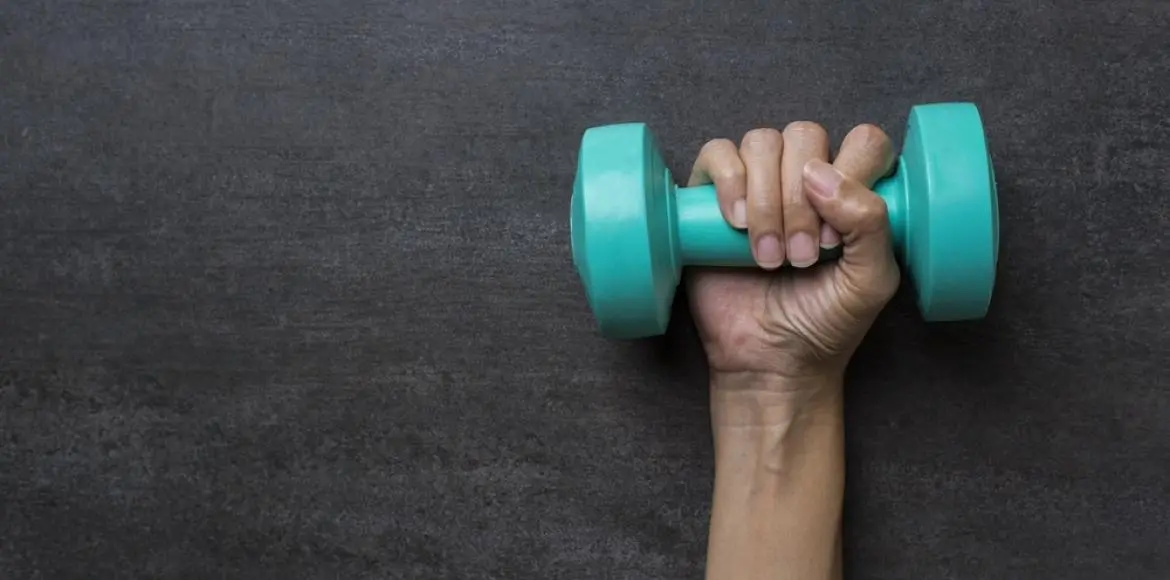
Strength training exercises on one arm also provide benefits to the other arm according to a recent study.
Why it matters
After an accident that affects an arm or leg, you risk losing strength and muscles in the immobilized limb. How to avoid this muscle atrophy? It has already been shown that resistance exercises (or strength training) performed on the valid limb have positive effects on the one that is immobilized. But what exactly can we expect from strength training for an immobilized limb by training the valid limb? Are there some exercises more effective than others?
In bodybuilding, there are in fact (basically) two types of exercises:
- Concentric exercises in which the muscles shorten. For example, when climbing stairs or lifting a dumbbell.
- Eccentric exercises where contracting muscles lengthen. For example, when you lower a dumbbell towards your arm or go down a flight of stairs.
An Australian study, published in the journal Scandinavian Journal of Medicine & Science in Sports, rated the best exercises to maintain muscle function in the immobilized arm.
What the study shows
For this study carried out at Edith Cowan University in Australia, researchers recruited 30 people, aged 18 to 34, whose dominant arm was immobilized for at least eight hours a day for four weeks.
The participants were divided into three groups: some did no exercise, others did concentric and eccentric exercises, and the rest only did eccentric exercises. These exercises which worked the elbow of the good arm took place during three sessions per week. Each session included three to six sets of 10 repetitive movements.
To do only eccentric exercises, participants used a very heavy dumbbell on their active arm. It was in this group that the strength of the immobilized arm increased the most. In addition, still on this arm, muscle atrophy was reduced, as Professor Kazunori Nosaka, one of the authors of the study, explains: “This group also had only 2% muscle loss in their immobilized arm, compared to those who did not exercise and who lost 28% of muscle. »
The study therefore shows that training on one arm promotes the strength of the other arm and limits its muscle loss. These results may have implications for patients who have had a stroke, for example, and whose body part is disabled.
For Professor Nosaka, “This could change the way we approach rehabilitation for people who have temporarily lost the use of an arm or leg. » He adds: “By immediately starting rehabilitation and exercise in the uninjured limb, we can prevent exercise-induced muscle damage in the other limb and also build strength without moving it at all. »
In the future, this type of research could be extended to other muscles, such as those of the leg. Athletes may also be interested in these results in order to recover more quickly after an injury.
-
Historical
-
Current version
10/26/2020 - on 10/23/2020