
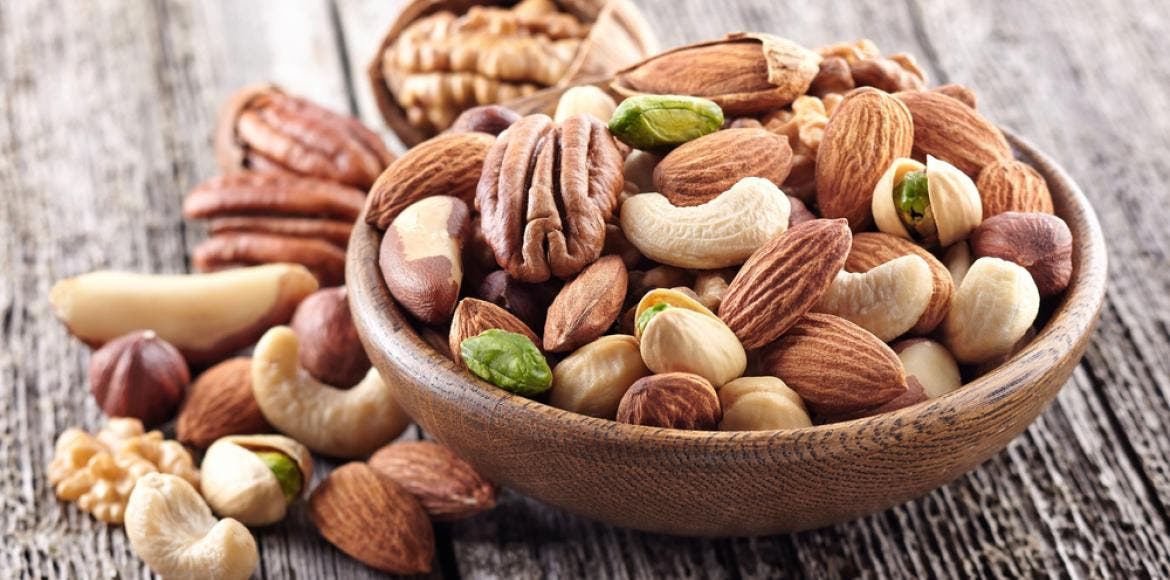
Rich in protein and good fats, nuts have a low sugar content. This is why they find their place in a ketogenic or low ig diet.
Before drawing up a top of the poorest nuts in carbohydrates, here are some data on their nutritional characteristics.
Nuts: nutritional contributions and benefits
Overall, the consumption of seeds and oils is favorable to cardiovascular health.
Lipids brought by nuts
The seeds and oleaginous nuts are rich in lipids, in mono and poly-insaturated fats. But sometimes they bring too much omega-6 compared to omega-3 fatty acids.
The vegetable proteins contained in the nuts
The seeds and oleaginous nuts provide between 10 and 25 g of protein per 100 g, making it an interesting source of protein in the context of a plant diet. But compared to meat, oilseeds do not contain all amino acids, and for example lack lysine.
Do nuts contain carbohydrates?
Yes nuts contain carbohydrates, but their simple sugars content is low. We detail you in the rest of the article the composition of 6 nuts poor in carbohydrates.
Nut fibers
The nuts and oil seeds are rich in dietary fiber, especially insoluble, with contents between 3 and 8 g per 100 g. Fibers facilitate intestinal transit. The consumption of oilseeds reduces the risk of type 2 diabetes and colon cancer in women.
Read: how fibers warn diabetes and obesity
The vitamins and minerals brought by the nuts
Olus nuts and seeds bring vitamins B1, B2, E, calcium, magnesium, phosphorus, potassium, zinc, selenium.
The calories brought by the nuts
A received idea concerning nuts and seeds is that they make people fat. However, studies show that it is not. According to the guide The best façpon to eat“Admittedly, the oilseeds are caloric, but as they increase satiety, in the end we do not gain weight. They regulate blood sugar and are therefore beneficial to type 2 diabetics, as part of a low IG diet. “
What nuts contain the least carbohydrates?
Pecan nuts
According to data from the National Food, Environment and Work Health Safety Agency (ANSES), pecan nuts only bring 5 g of carbohydrates per 100 g. They therefore contain few carbohydrates, and an attractive rate of fibers: 3 g for a portion of 15 nuts, or around 10 % of the daily intake for an adult.
According to the Reference Guide The best way to eatPécan displays an ORAC index – index that measures antioxidant power – particularly high, “That is to say, it is rich in antioxidant substances. In addition, it contains zinc, essential to the skin and the hormonal system. »» 100 g of pecans provide more than a third of the daily contributions recommended for zinc in adults. This trace element also plays an important role in immunity, an asset to protect yourself from infections in winter. Pecan nuts are also a good source of potassium (100 g provide more than 10 % of the recommended daily intake), an important mineral for cardiovascular health and which intervenes in acid-base balance.
Macadamia nuts
Like pecan nuts, macadamia nuts brings about 5 g of carbohydrates per 100 g according to the handles of the ANSES. Unlike many nuts that are acidifying, Macadamia nuts presents a negative pral index: it does not give the organism. Macadamia nuts are also distinguished by its high content of mono-insaturated fat, beneficial to cardiovascular health.
A small study on 17 men with high cholesterol levels found that consumption of macadamia nuts reduce the biological markers of inflammation, thrombosis and oxidative stress, which are cardiovascular risk factors. Participants ate 40 to 90 g of macacdamia nuts per day for four weeks.
Brazil nuts
Brazil nuts contain approximately 6 g of carbohydrates per 100 g, according to handles. Brazil nuts are particularly rich in selenium, a major antioxidant, according to The best way to eat,, “Present in the top 5 foods richest in magnesium (30 g bring 110 mg, as much as six squares of dark chocolate), it is therefore anti-stress and allied with sportsmen since magnesium promotes muscle contraction and nerve implux”.

Hazelnut
The hazelnut brings about 7 g of carbohydrates per 100 g, according to handles. It is also rich in vitamin B9 (folates), which allows the good development of the fetus. It is also a source of potassium, iron, calcium and vitamin E. Another asset: “With the common nut, it is the only one to have an omega-6/omega-3 low report (close to 5) while all the others oslicle between 10 and 23”.
Almond
Almonds bring about 9 g of carbohydrates per 100 g. Among the oilseeds, almonds win several “palms”. They are notably the champions for potassium content and vitamin E.
Almonds are interesting for losing weight, because they are a snack that decreases appetite. “The non -bleached almonds contain a large proportion of fibers (12.6 g/100 g or 3.2 g per portion of 20 almonds), especially insoluble (80 %) which have a full effect and make it possible to facilitate intestinal transit”.
Grenoble nuts
Grenoble nuts contain approximately 10 g of carbohydrates per 100 g according to handles. The Omega-6/Omega-3 report of nuts is optimal since it is 4.7. In a study on 293 people who sought to lose weight, those who ate approximately 30 g of nuts per day token more than the others.
What is the glycemic nut index?
The 6 nuts mentioned above all have a low glycemic index (IG),
To find out more: The IG guide
In practice: how to consume nuts and seeds
After The best way to eatit is better to choose nuts and natural seeds: “The grilled versions are a little less interesting insofar as they bring compounds called advanced glycation products (AGE), directly responsible for aging. Salt versions are to be avoided.”
How many nuts, hazelnuts and almonds can you eat per day?
The guide The best way to eat advisor one to two portions of nuts and oleaginous seeds per day. A portion corresponds to 8 nuts or 20 almonds or 25 hazelnuts.