
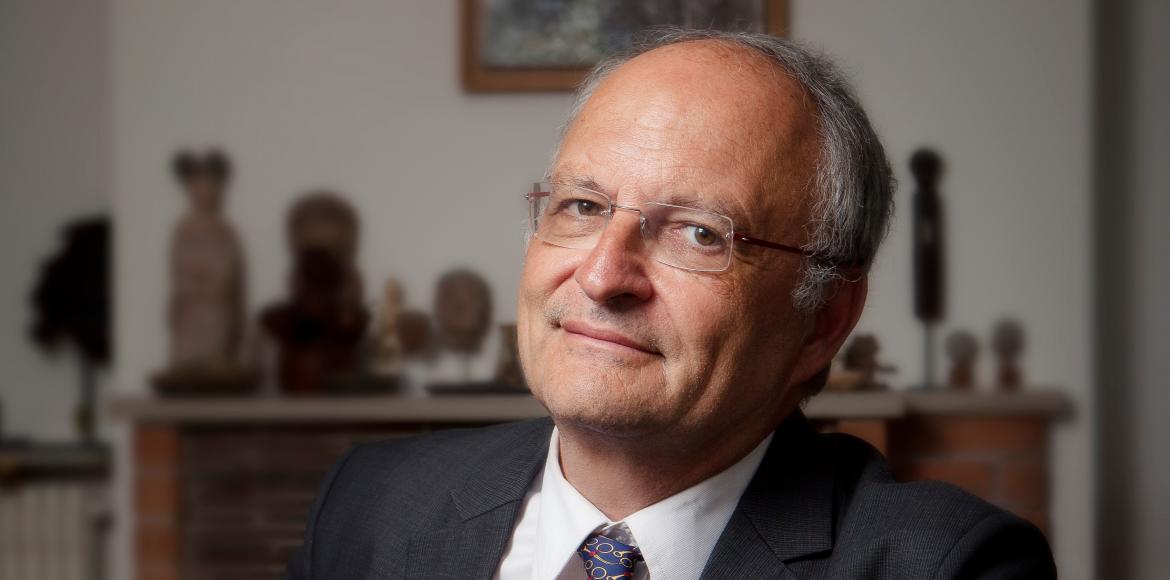
For Dr. Laurent Schwartz, author of The keys to cancercancer is probably a disease of cellular metabolism. By correcting these anomalies, along with current treatments, he hopes to slow down the disease, or even improve the patients.
Before being perceived as a disease of the genome, cancer was considered a disease of metabolism: since 1924, we have known that cancer cells obtain their energy from the fermentation of sugar. This track has been forgotten. Dr. Schwartz and the multidisciplinary scientific team he put together reopened and explored it. In the book The keys to cancer (August 2022), they propose a new reading of cancer, which opens the way to new treatments: the metabolism of cancer cells is disrupted, it must therefore be normalized and several substances have the capacity to do this in addition to traditional treatments, without major side effects.
LaNutrition.fr: Survival in cases of cancer has improved. This is good news, which you temper however.
Dr. Laurent Schwartz : Battles over numbers are constant in economics and politics but also in cancerology. With my team, we have not studied the survival rate which, in fact, has been improved but the mortality rate. And what is clear so far is that the cancer death rate hasn’t changed much in 40 years. It even increased until the 1990s and then fell slightly afterwards. A drug, imatinib (Glivec), has indisputably reduced the mortality of a certain form of leukemia but other cancers have not experienced this type of therapeutic success. As many cancers are (unnecessarily) detected that would never have killed people, the survival rate has increased.
What was the impact of the screening campaigns?
The lack of major progress on mortality shows that screening does not work or does not work well. Not all countries introduce screening campaigns at the same time and the analysis of mortality does not show any convincing difference. This, taking into account the growth and aging of the population. Clearly, the impact of screening is not major, with the exception of cervical cancer (screened by smear), it has not made it possible to reduce the number of deaths.
Read also about breast cancer screening, Mammo or not mammo? by Dr Cécile Bour
You have spent your professional life searching for new treatments. For what ?
It is clear that almost as many people die from cancer today as 50 years ago! If we take into account the increase in life expectancy, mortality from cancer remains very high (150,000 deaths per year in France). The life expectancy of people with difficult-to-treat cancers (pancreas, brain, lung, etc.) has not improved. We must face the facts: therapeutic advances are not up to par. However, it is not for lack of devoting enormous budgets to this “cause”. A cause which could seem lost in view of this very disappointing and unacceptable assessment, because possible solutions exist.
Read also: If cancer is a metabolic disease, how to treat it?
What makes you think we need to take a new look at cancer?
The history of cancer is also that of general blindness, one of those collective errors that mark History. Nearly a century ago, the scientists of the time had already understood the essentials. We have only deepened their research and continued their work. For my part, I never believed in the conspiracy theory. On the other hand, I believe in conformism, conservatism and, even more, in the paralyzing stupidity of the individual, in stubbornness and the absence of questioning a dogma that everyone knew to be false. How could we have the indecency to announce success when death reigns? Where is progress when everyone knows failure? Too much money and political correctness did the rest: they killed real research. To search is to accept error and bet that you can succeed. To research is to question one’s certainties, one’s beliefs sometimes, with the hope of advancing science.
You claim that cancer is a metabolic disease. What do you mean by that?
A cell that burns nutrients, thanks to its energy plant (the mitochondria), does not grow. When its mitochondrion is damaged, when it cannot burn everything, the cell begins to ferment, therefore to grow and proliferate. This is the basic explanation of cancer. Treating cancer means limiting cancerous fermentation by limiting the supply of nutrients to the cell and burning them in the mitochondria.
How did you come to think that the mitochondrion was the seat of the cancer mechanism?
Warburg, Nobel Prize winner for medicine in 1931, had already thought about this hypothesis almost 85 years ago… Other researchers wanted to test it: they injected mitochondria from normal cells into cancer cells. The cancerous character is gone! The cell began to breathe again and stopped multiplying. However, we are always told that cancer is a disease of the genome but when we inject the nucleus of a cancerous cell into a healthy cell, it remains healthy, and when we replace the nucleus of a cancerous cell with a nucleus of a healthy cell, the cell remains cancerous! A century after the work carried out by Warburg and his teams, it has once again been demonstrated that cancer is a disease of the mitochondria and not of the genome. Cancer is just a disease. A nasty illness, but a simple illness. A disease of cellular digestion, and everything must therefore be done to correct this anomaly.
Are there already treatments aimed at starving the cancer cell and forcing it to burn?
This may seem surprising given the mortality data, but understanding of the disease has progressed greatly. Today’s treatments are therefore better tolerated and less aggressive. Some are even very targeted. But the spark that will enable victory is still missing. That spark could be to combine different approaches: first, reducing the cancer’s food intake. This is already done through targeted therapies which reduce the arrival of energy-rich polypeptides or hormones equally rich in energy. Other targeted therapies slow down the cellular machinery (anti-kinase); then, improve energy efficiency so that the cell burns instead of growing.
Associated with current treatments, the complementary treatments that we offer make it possible to change the internal metabolism, to improve it and thus to considerably strengthen the effectiveness of the targeted therapy.
Read also: Cancer: hope with the ketogenic diet and calorie restriction
Have you experimented with these treatments in animals?
I am a scientist. With my team, we first thought for a long time and reread the elders who had also thought about cancer. To prove intuition, one must experiment. I don’t believe in isolated, well-fed cells in a petri dish. So we used mice that were injected with tumors. These cancers grow and can be measured. Nearly 5 years and 15,000 mice later, we had a treatment that slowed the growth of cancers in animals. The combination of the two products has proven to be extremely effective in slowing the growth of cancers of all types (bladder, colon, lung, skin melanoma, etc.).
Read also: Breast cancer: protective foods, those to avoid
Are patients using your treatments? With what results?
In a compassionate capacity, I have treated advanced and incurable cancers. These patients had been sent home for the end of their lives. Several patients had received the sacrament of the sick. Our book presents the cases of some of these patients who underwent metabolic treatment with encouraging results in terms of survival. We can always be criticized for a lack of rigor, the absence of blood tests and make all kinds of accusations, but one fact is indisputable: patients exist and they can testify.
Is metabolic treatment beneficial for all types of cancer?
It seems to me that the first real revolution in metabolic treatment concerns brain tumors, and in particular the most violent: glioblastoma. Life expectancy is a few months. Many of the patients who underwent metabolic treatment, in conjunction with conventional treatment – as long as they were in good general condition, that is to say capable of taking the metabolic treatment – experienced an improvement in survival.
The metabolism track is a promising avenue not only in cancer, but also for curing or improving patients with Alzheimer’s and Parkinson’s disease.
What do you think of the ketogenic diet?
The ketogenic diet represents a fundamental part of cancer treatment. Cancer is a disease of sugar fermentation. Lowering sugar intake and offsetting it with protein and fat may be important in certain cancers.
To learn more about this treatment, read: The keys to cancer
Read also: “The ketogenic diet is still too little known to cancer patients”
-
Historical
-
Current version
02/16/2026 - 10/23/2024
- 11/22/2023
- on 02/25/2016