A plant native to Asia, konjac, transformed into noodles, rice or flour, has the reputation of a natural and low-calorie appetite suppressant. We take stock of this slimming food with Dr Pierre Dukan who publishes The Best Way to Lose Weighta work devoted to konjac.
What is konjac?
Konjac (Amorphophallus konjac) is a plant tropical perennial, from the Araceae family, cultivated for its tuberous root in Asia, particularly in China, Japan and Vietnam. Its flower, which is reminiscent of that of the arum, gives off a nauseating odor. Konjac is sometimes called “devil’s tongue”, because of its shape, red color and smell.
The different forms of konjac
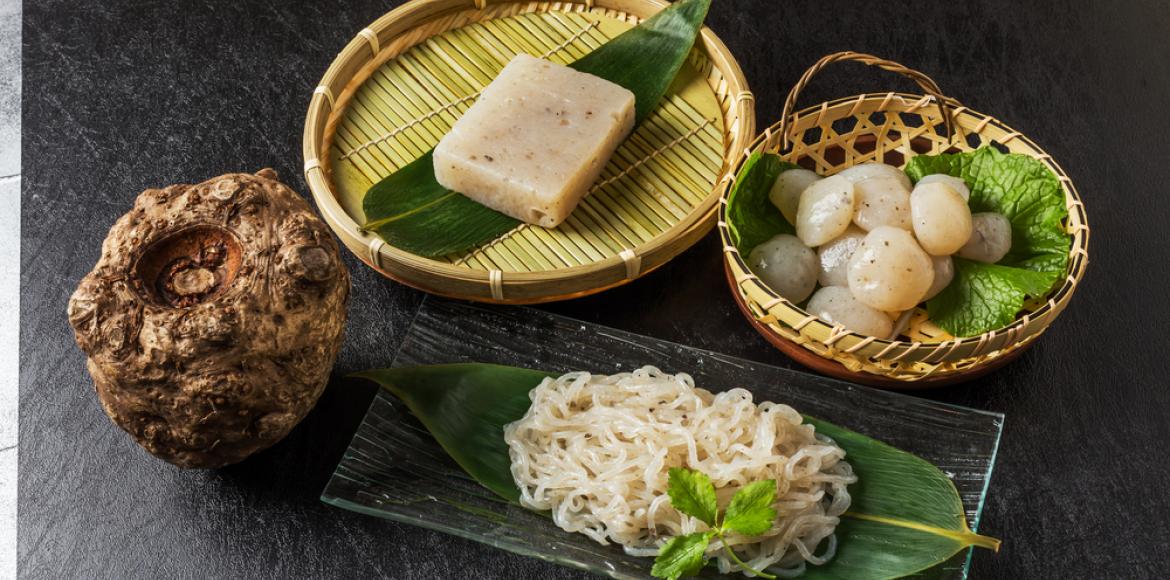
In stores, konjac comes in several forms: white powder, capsules, or flour for use in cooking. It is this flour that makes it possible to make the famous konjac pastes — noodles, spaghetti — including shirataki, these very fine Japanese vermicelli. Konjac is also found in the form of rice or pearls, and it is sometimes used in the composition of gluten-free flours.
How is konjac eaten?
In Japan, the konjac is often consumed in the form of konnyaku. “Konnyaku comes in the form of blocks of firm gel, obtained by mixing the konjac flour with water and an alkaline agent – traditionally vegetable limeexplains Pierre Dukan who markets products based on konjac These blocks are then cut into cubes or strips to accompany broths, stews and simmered dishes, notably oden, one of the emblematic dishes of Japanese winter. »
Shiratakis, whose name means “white waterfall”, in reference to their translucent appearance, are a more recent variation of konnyaku. “They are especially appreciated for their ability to absorb the aromas of broths, sauces and spices,” he said.
One fiber, almost zero calories
Konjac owes its nutritional value to its very particular composition. It contains mucilages, notably a large quantity of glucomannans, proteins, but also vitamins, trace elements and mineral salts, such as potassium, phosphorus and selenium. On the other hand, it provides very few calories. For example, 100 g of konjac shirataki spaghetti only provides 10 calories, ten times fewer calories than classic pasta ! But it is above all its richness in soluble fiber which explains its effects on appetite and transit.
How does glucomannan work?
Glucomannan is a soluble fiber that allows konjac to absorb a large volume of water. It is this mechanism, purely physical, which is at the origin of most of the effects attributed to konjac.
- In the stomach, the gel distends the walls and triggers the feeling of fullness more quickly. This is why konjac is often used as a natural appetite suppressant.
- In the small intestine, it slows the absorption of part of the carbohydrates and lipids from the meal.
- On blood sugar, by delaying gastric emptying, it attenuates the blood sugar peak that follows a meal rich in carbohydrates.
- In the colon, it serves as a substrate for microbiota bacteria, notably lactobacilli and bifidobacteria.
Konjac is also the additive E425, a thickener in the food industry: E425i for konjac gum and E425ii for glucomannan of konjac. Gum and glucomannan are both fermented thanks to the intervention of bacteria from the intestinal microbiota, they are not absorbed as is by the body.
The health benefits of konjac
Konjac helps with weight loss
Studies show that konjac glucomannans help with weight loss in obese patients. In 2010, EFSA – the European Food Safety Authority – wrote a scientific opinion on the health claims made about konjac glucomannan. The EFSA concluded that there is a cause and effect relationship between the consumption of glucomannan and the maintenance of normal blood cholesterol concentrations and the reduction of body weight. To achieve this weight reduction effect, “at least 3 g of glucomannan must be consumed daily in three doses of at least 1 g each, accompanied by one to two glasses of water before meals, as part of a low-calorie diet”. The population targeted by the food supplement is that of overweight adults. Konjac glucomannan is therefore an ingredient present in slimming products.
Read also: 3 slimming rules from lanutrition.fr
A meta-analysis published in 2020 demonstrated statistically significant weight loss in overweight or obese adults. In a 2015 trial involving 83 people, a food supplement containing 3 g of konjac glucomannan helped reduce weight, body fat and blood cholesterol levels in overweight adults after 60 days of use.
Generally speaking, dietary fiber, like konjac, helps with weight loss. Populations that consume the most dietary fiber are less affected by obesity.
Transit and microbiota
Konjac glucomannan is a glucose-containing polysaccharide and mannose. This dietary fiber is present in food supplements intended to combat constipation. Glucomannans are particularly interesting because of their lack of toxicity for the body. As a prebiotic, konjac promotes the growth of good bacteria in the gut microbiota.
One small study out of seven people has shown that it increases the frequency of bowel movements in constipated adults by approximately 30%, while promoting the growth of protective bacteria such as lactobacilli and bifidobacteria.
Therefore, konjac, as a dietary fiber, can be considered a natural laxative.
Cholesterol and triglycerides
Cholesterol level is often considered a cardiovascular risk factor. Generally, fiber consumption is beneficial for controlling its rate blood cholesterol. This is why konjac has been the subject of various research to find out if it could help stabilize cholesterol in the blood.
In 2017, an analysis of 12 studies involving more than 300 people concluded that a dose of 3 g of konjac glucomannan per day helps reduce LDL cholesterol levels, also known as “bad cholesterol”, by 10%.
Blood sugar and type 2 diabetes
In 2023, a study of 26 type 2 diabetic patients showed a drop in blood sugar fasting and glycated hemoglobin by eating konjac every day for 12 weeks.
In healthy subjects, a 2020 study showed that glucomannan attenuates the rise in blood sugar and insulin caused by a meal of ricewhich is consistent with the idea that konjac can “slow down” the glycemic effect of a high-carbohydrate meal.
The associated risks and dangers
In clinical trials of konjac, gastrointestinal side effects have been noted, such as diarrhea or constipation. This was observed in a study where overweight or obese adults consumed 3g of konjac per day for 12 weeks. Do not hesitate to seek medical advice from a healthcare professional in case of doubt or prolonged use.
Konjac should be avoided during pregnancy, breastfeeding, inflammatory bowel disease or intestinal obstruction.
Toxicology studies have not demonstrated any serious side effects. Konjac gum and konjac glucomannan are not genotoxic.
Konjac, instructions for use
Konjac and its derived products (flour, noodles, rice, pearls, etc.) can be purchased in Asian grocery stores, organic stores, organic sections of supermarkets or specialized stores that sell food supplements.
How to use konjac to lose weight?
You can take a level teaspoon of konjac in a little water, or two capsules with a glass of water, 15 minutes before a meal. The recommended doses are around 3 g per day in three doses of 1 g.
Consult our file on the best slimming aids (subscribers)
Konjac: how to cook it, recipes
Konjac is an interesting ingredient as part of a ketogenic diet. For example, in the form of konjac riceit will accompany stuffed tomatoes. Konjac noodles can replace rice vermicelli in miso soup. As konjac has a neutral, bland taste, it can be interesting to enhance it with spices and herbs to enhance the taste.
A recipe: konjac noodles with scrambled eggs
Source : The Best Way to Lose Weight
Ingredients
- 2 bags of konjac noodles
- 4 eggs
- 150 g zucchini
- 40 g of unsalted butter
- ½ onion
- 1 drizzle of olive oil
- Salt, pepper
- Parsley
Preparation
Peel and slice the onion.
Wash the zucchini, peel them then cut them into small cubes.
In a pan, brown the onion for 5 minutes with the olive oil. Then add the zucchini and simmer over low heat for around ten minutes, stirring regularly.
Salt and pepper.
Break the eggs into a bowl then beat them well. Pour over the zucchini and cook over medium heat, stirring continuously, until cooked.
Then, follow the instructions on the packet for preparing the noodles, then add them to the dish. Then sprinkle with parsley.
Serve immediately.
A recipe with konjac rice: Muhallebi without sugar
In brief
In conclusion, konjac is a supplement that provides dietary fiberbeneficial for controlling weight and cholesterol levels. However, konjac is not a miracle cure for weight loss. In general, it is advisable to have a healthy diet and regular physical activity to maintain a healthy weight.