
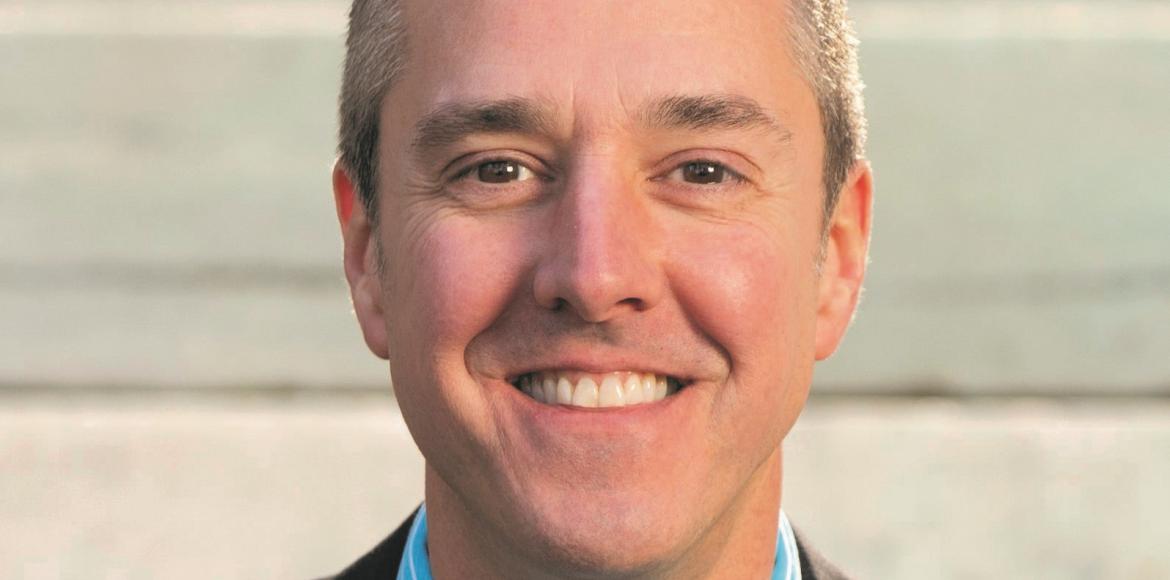
For this Harvard psychiatrist, depression, bipolar disorders or schizophrenia are primarily disorders of cerebral metabolism. An innovative theory, born from a painful family history and patients who could no longer find relief.
The day he returned to high school, Christopher Palmer stayed home. “My first day of high school, I started from a homeless shelter,” he said. His mother had just lost control. Around the age of 42, after a series of family crises and a divorce, she had slipped into psychosis, to the point of believing herself to be “Mary Magdalene reincarnated”. She had lost custody of her children. The teenager chose to follow her: “I knew she was going to die. So I went to live with her. »
She didn’t die of mental illness, at least not directly. She gained weight, became diabetic, then had a heart attack, and eventually died of heart failure. Years later, his son dedicated his book to him with these words: “I’m sorry I didn’t understand this in time to help you. »
A psychiatrist who doubted his discipline
What he had not understood from his mother, he sought for more than twenty years. Having become a psychiatrist, a teacher at Harvard Medical School and long-time head of continuing education at McLean Hospital, Harvard’s psychiatric establishment, Christopher Palmer treats patients, most of whom have already tried everything. He draws a harsh observation from this. Treatments relieve symptoms, rarely more.
The path he is going to follow, he first tested on himself. In his twenties, although thin and active, he presented with metabolic syndrome and prediabetes. The low-fat diet recommended by his colleagues changes nothing. It then greatly reduces carbohydrates. “In three months, my metabolic syndrome had completely disappeared,” he says. He notices something else: his mood, energy and sleep have improved at the same time.
The man with 17 drugs
The clinical breakthrough occurred in 2016. A patient suffering from schizoaffective disorder, which combines symptoms of schizophrenia and mood disorders, came to consult him to lose weight. “He had tried 17 different medications. None had worked. » Palmer suggested a ketogenic diet, very low in carbohydrates and high in fats, the one that has been prescribed to epileptic children for a century. Within six to eight weeks, this man’s hallucinations and delusions fade. “He lost 72 kilos, he never gained them back, it was a new life for him. »
Other doctors had made this type of observation before him. In 2009, doctors at Duke University in North Carolina described the case of a 70-year-old woman, schizophrenic since adolescence, who came to their clinic to lose weight. “Within two weeks, not only did she begin to lose weight, but her hallucinations and delusions began to disappear,” Palmer summarizes. She lived another fifteen years, without medication or symptoms, according to him.
Cells running out of energy
From these stories, the psychiatrist draws a theory that he himself presents as provocative: “Mental disorders are metabolic disorders of the brain. » At the heart of his model are the mitochondria, these tiny powerhouses installed in our cells. They are usually described as simple energy producers. “Mitochondria are much more than energy plants,” he corrects. They participate in the production of neurotransmitters and control “the first step in the synthesis” of many hormones, including cortisol. “If your brain cells don’t get enough energy, they don’t work properly,” he explains.
A neuron running out of energy can slow down, which can result in depression, or on the contrary go into overdrive, which could manifest itself as anxiety, obsessions or hallucinations. Stress, inflammation, lack of sleep, alcohol, sedentary lifestyle or isolation would all act on this same lever. The ketogenic diet, which forces the body to burn fat and produce ketone bodies, would provide cells with backup fuel.
“Stopping your medication is dangerous”
His speech seduces, but Palmer does not want to give false hope. First warning: “Stopping your medication is dangerous,” he repeats. Abruptly stopping psychiatric treatment without having restored metabolic health would, he says, be like removing the cast from a broken leg and telling the patient to go for a run.
He also warns that the ketogenic diet can reduce sleep, a serious risk for people with bipolar disorder.
He also recognizes the limits of his approach: “It doesn’t work for everyone.” According to him, about half of patients who seriously follow the diet for several months benefit from it. The diet should complement psychotherapy and medications, not replace them.
To date, most of the evidence is based on clinical cases and small trials without a control group. The first randomized trials in schizophrenia have been completed, their results will soon be published.
Read: Ketogenic Diet for Mental Illness: Is Kennedy Right?
20 million for research
The psychiatrist, however, won part of the battle. Among his patients was Matthew Baszucki, a young man with severe bipolar disorder, who the ketogenic diet helped return to a normal life. His parents, who made their fortune in video games, now finance research in metabolic psychiatry. On October 21, 2026, McLean Hospital announced, thanks to a $20 million donation from their foundation, the creation of the first American center for metabolic psychiatry. Palmer will provide training for caregivers there, while continuing his consultations in his clinic in Wellesley, near Boston. He remembers the family’s first call: “I’m really glad I picked up. »
The director of the new center, Dost Öngür, had summed up the state of mind of the institution two years earlier: he saw the ketogenic diet as a “textbook case”, not a “miracle solution”.
Palmer sees further: “We are talking about a new way of understanding human health,” he says. And he thinks of those he meets every week: “I want to help these people who are told: we no longer have anything to offer you. »