
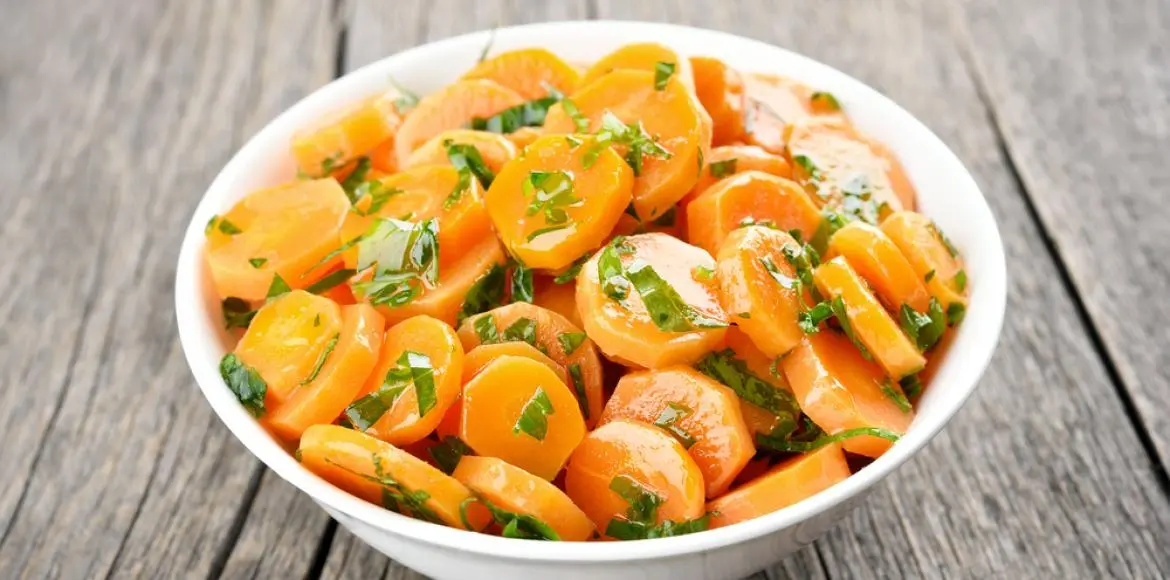
For years, carrots have been the most feared vegetable for type 2 diabetics. Why? Because the glycemic index of cooked carrots was considered close to that of sugar… It was wrong! LaNutrition.fr tells you the truth about this vegetable. Let’s rehabilitate the cooked carrot!
Are carrots good for type 2 diabetics?
For a long time, carrots were a vegetable banned from the diets of type 2 diabetics, because in 1981 they had, once cooked, a glycemic index of 92, which is very high. However, this supposed hyperglycemic effect turned out to be an error.
For more than twenty years, the cooked carrot has been the ugly duckling in the kingdom of vegetables: “ all vegetables have a low GI except cooked carrots which should be consumed sparingly » could we read in the advice to diabetics. This value of 92 for the GI of cooked carrot comes from the first studies conducted in 1981 on the glycemic index. Only 5 people participated and the results were very mixed.
But new carrot GI values were published in 2002 by Jennie Brand-Miller’s team at the University of Sydney and are much more reliable (1). From now on, carrots, raw or cooked, are considered to have a low GI.
Is there a lot of sugar in carrots?
The carrot is among the 100 foods selected by Angélique Houlbert, dietician-nutritionist, to appear in her book 100 low GI foods at will. “Just like beetroot, this root vegetable provides almost 7 g of carbohydrates per 100 g, said Angélique Houlbert. However, its GI is low when cooked and even very low when raw. The carrot therefore has little impact on blood sugar levels. Rest assured, up to 660 g raw or 340 g steamed, the
glycemic load remains low.” We can therefore integrate it almost as much as we want into the diet of diabetics!
What is the glycemic index (GI) of raw or cooked carrots?
Today it is estimated that the GI of raw carrots is 20 and that of cooked carrots is 40. This means that carrots do not significantly and quickly increase blood sugar levels.
What about carrot juice?
The GI of carrot juice is estimated at 43. 100 g of carrot juice provides 6.5 g of carbohydrates and only 0.3 g of fiber, which is much less dietary fiber than “whole” carrots.
Other benefits of carrots in a diet
Rich in carotenoids such as orange beta-carotene, slightly red lycopene and yellow lutein, carrots protect against excess free radicals and maintain the integrity of the skin and mucous membranes. Beta-carotene is converted in the body into vitamin A, essential for vision and the immune system.
The presence of these carotenes would be an additional advantage in the fight against type 2 diabetes, as shown in a study published in 2015 (2). According to this work, high dietary intakes of α-carotene and β-carotene are associated with a reduced risk of type 2 diabetes in healthy adults. “ Their antioxidant role would also allow them to reduce the risk of diabetes by reducing oxidative stress which plays an important role in the development of this disease. » explains the article.
The antioxidant role of carotenes could reduce the risk of diabetes
In this study, researchers assessed the dietary intake of carotenoids in 37,846 people in the study. European Prospective Investigation into Cancer and Nutrition-Netherlands. The average carotenoid intake of participants was 10 mg/day, with β-carotene and lycopene being the most represented. During the 10 years of follow-up, the researchers recorded 915 cases of diabetes.
The results show that higher intakes of α-carotene and β-carotene are associated with a significant reduction in diabetes risk. The highest intakes of β-carotene are associated with a reduction in diabetes risk of 22% compared to the lowest intakes.
Also note the richness of carrots in vitamin B9. To limit the loss of vitamins, it is advisable to limit the cooking temperature.
Read: Steam cooking: should you adopt it?
How to choose your carrots
Angélique Houlbert advises choosing ripe carrots, for their richness in fiber, and colored carrots to have more carotenoids. Prefer carrots that are firm, crunchy, with smooth, blemish-free skin. During peak season, try the black/purple versions and the yellow ones. Store the carrots in the vegetable drawer of the refrigerator, for a maximum of 2 days for early carrots and 7 days for storage carrots. Blanch in boiling water for 3 minutes, carrots tolerate freezing very well.
Recipe ideas with carrots:
-
Carrot gazpacho with lemongrass
-
Bone Broth
-
Roasted carrots, fennel and parsnips
-
Veggie meatballs with cauliflower and chia
-
Vegetable cream soup with lemongrass and ginger
What vegetables are recommended for diabetics?
In case of type 2 diabetes, it is advisable to consume low GI vegetables, because they limit blood sugar peaks (rapid increase in blood glucose level after a meal).
IG: what do you think of beets and peas?
Raw, beets have a low GI. “A raw beet will have no impact on blood sugar”says Angélique Houlbert. On the other hand, when it is cooked, it will be necessary to limit its consumption, in order to limit the effects on blood sugar, because its GI is higher (64) and considered moderate. Angélique Houlbert advises consuming only 100 g.
Compared to frozen fresh peas, fresh cooked peas have a lower GI (25, compared to 36 for frozen), a lower carbohydrate content (4.7 g/100 g) and therefore a lower glycemic load (1.2). “You can therefore consume up to 830 g of it cooked without having a heavy impact on blood sugar levels”, explains Angélique Houlbert.
What is the difference between GI and glycemic load?
The glycemic load takes into account the serving size of the food and the amount of carbohydrates present. So the calculation of the glycemic load (CG) is as follows:
CG = (GI x amount of carbohydrates in a serving of food (g))/100.
Below 10, a CG is considered low.
Peas, like all legumes, provide proteins (5 g/100 g, as much as yogurt), fiber (5.5 g/100 g) and phytoestrogens (genistein, daidzein) like those from soy. It is also a source of vitamin B9. However, “avoid canned peas as much as possible, which are decidedly overcooked and whose GI and glycemic load will necessarily be even higher”advises Angélique Houlbert.
For your side dishes, eliminate potatoes and their derivatives, which unfortunately often play an important role in Western diets. Potato preparations generally have moderate to high glycemic indices, with the exception of potatoes eaten cold.
In conclusion, low GI vegetables are real allies in the diet of diabetics.
To help you better choose your foods, the LaNutrition.fr team has published a short guide at a reduced price which contains the glycemic index of more than 700 foods: to discover here
-
References
-
Historical
- Brand-Miller JC: “International table of glycemic index and glycemic load values: 2002.” Am J Clin Nutr. 2002 Jul;76(1):5-56.
- Sluijs I, Cadier E, Beulens JW, van der A DL, Spijkerman AM, van der Schouw YT. Dietary intake of carotenoids and risk of type 2 diabetes. Nutr Metab Cardiovasc Dis. 2015 Apr;25(4):376-81. doi: 10.1016/j.numecd.2014.12.008. Epub 2014 Dec 31.
-
Current version
on 02/03/2026 - on 01/30/2026
- on 06/09/2024
- 04/11/2006