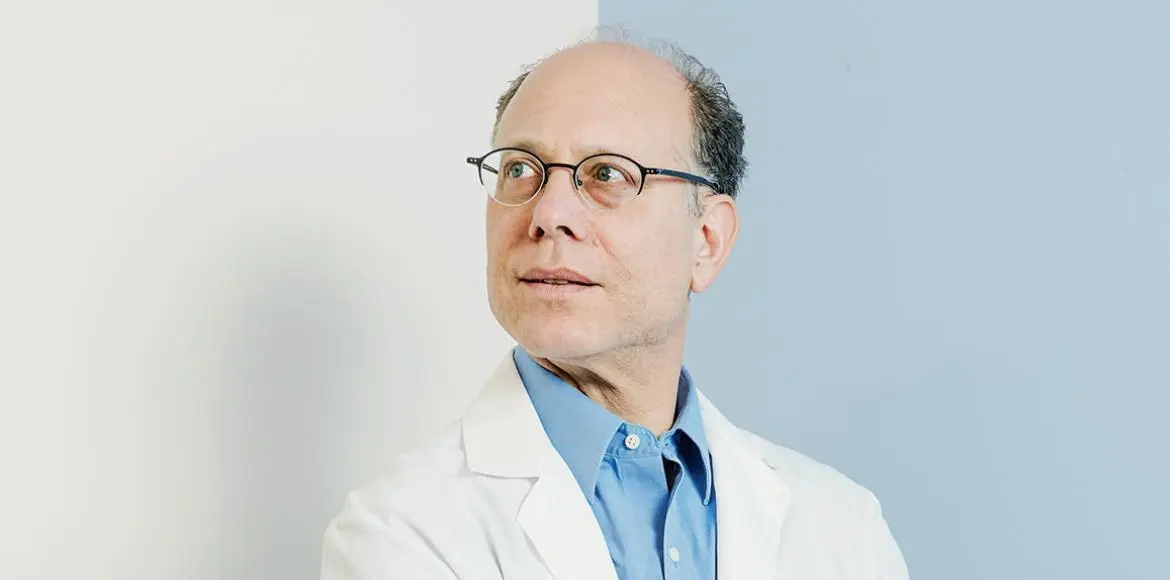
Professor David Ludwig, one of the best carbohydrate specialists, is a professor at the Harvard School of Public Health. In this interview, he says what, in his opinion, is the best way to lose weight.
The majority of weight loss diets are based on the concept of calories: we lose weight by reducing the calories ingested, so that they are lower than the calories expended. But this model has been contested for several years by researchers; it is in fact often unsuccessful, with most of the weight lost often being regained in the long term. Professor David Ludwig is the leader of these protesters: for several years he has defended an alternative model which places insulin resistance at the center of the weight gain process. We give him the floor.
According to you, when we talk about weight, we should forget about calories. For what ?
Professor David Ludwig : Cutting calories, the age-old approach to weight loss, will work in the short term. But for most people, it ultimately fails, for one simple reason: the body predictably fights against forced calorie deprivation – by increasing feelings of hunger, slowing metabolism, and increasing stress hormones. Only a tiny portion of the population can reduce their weight through calorie restriction. This isn’t a story of ill will – it’s purely biology.
What problems does the current diet pose?
The main problem with our foods today is that they have been ultra-processed. It’s fast food in every sense of the word: you eat quickly, but you also digest quickly, causing your metabolism to surge and then crash. Refined carbohydrates program our bodies for weight gain, because they increase levels of insulin, a hormone that acts as a fertilizer for fat cells.
In contrast, whole, raw foods are digested slowly, along the entire length of the intestinal tract, resulting in only a slight increase in blood sugar and a gentle return to baseline. Calories are not stored in adipose tissue, but rather used – oxidized, in biological terms – by the rest of the body and the brain.
Read also: Ultra-processed foods: how to recognize them, the risks they pose and Emotional pounds: how to eliminate them, how to prevent them
What to do to lose weight sustainably?
So that calories are not stored but used by the body, we can do three things:
- First, replace refined, processed carbohydrates with whole fruits, vegetables, legumes and moderate amounts of whole grain products.
- Second, eat enough protein, which can include plant-based sources.
- Third, enjoy delicious high-fat foods – oilseeds, oilseed butters, olive oil, etc. – because fats quickly lead to satiety and have a minimal effect on insulin.
When you eat this way, blood sugar, hormone and insulin levels change more gradually after the meal. It’s like an ocean tide that gently rises and falls, versus the tsunami caused by a processed diet. This is a natural process of eating and fasting to which the body adapts easily. Fat cells calm down and store less. Hunger decreases. The metabolism speeds up. It’s a recipe for long-term weight control without restriction or deprivation.
Any approach to weight loss that involves deprivation is tiring on both a psychological and biological level. But if you give your body what it needs, it causes an immediate positive response, and that’s what strengthens it. The beauty of working with, rather than against, your body will ensure that your slimming resolution never expires.
Read also: Professor Ludwig: “Everyone should follow a low glycemic index diet”
The message in summary
“ Forget calories, focus on the quality of food and let your body do the rest. »
Reprinted with permission from Harvard Public Health Magazine / Reprinted with permission from Harvard Public Health magazine.
-
Historical
-
Current version
08/25/2023 - on 02/05/2023
- 04/28/2023
- on 02/01/2018