
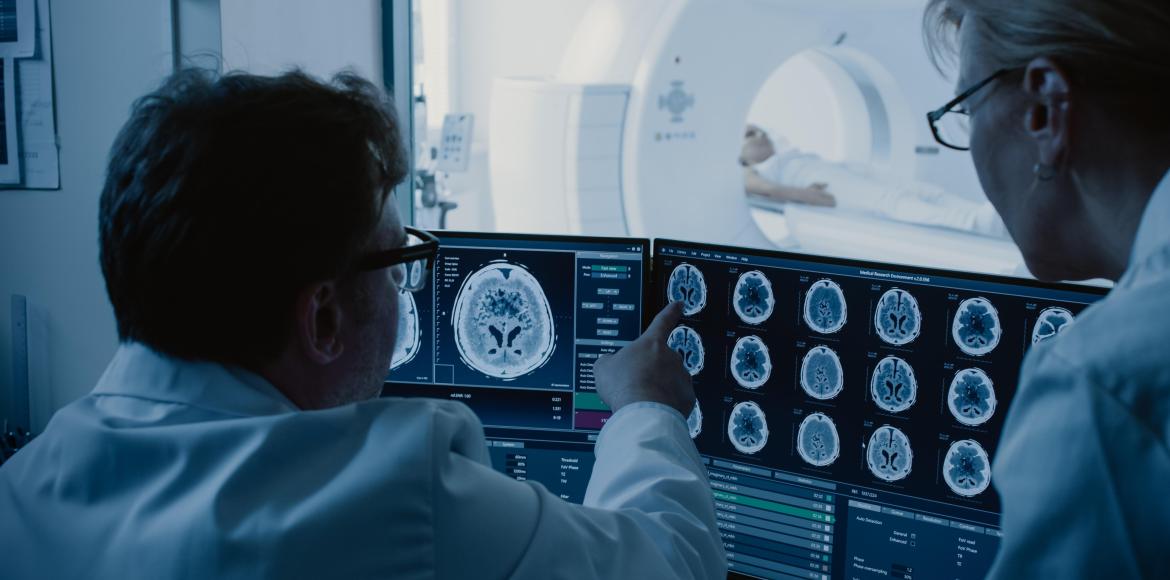
According to an American study, low bone density is associated with faster cognitive decline. Bones and brain could suffer from the same metabolic imbalances.
What is the relationship between the solidity of the skeleton and the liveliness of the mind? At first glance none. However, researchers at Johns Hopkins University have observed that people whose vertebrae are more fragile, with lower bone density, also see their cognitive abilities decline more quickly.
The American researchers used data from the MESA (Multi-Ethnic Study of Atherosclerosis) cohort. They did not use traditional bone densitometry, but chest scans. An algorithm, developed in the laboratory of Professor Shadpour Demehri, calculated the bone mineral density of the thoracic vertebrae.
In total, 715 participants had both this measurement, a brain MRI and cognitive tests. Baseline spinal bone mineral density was measured during an examination in 2016-2018 and brain results were assessed 17-18 months later and again during an examination in 2022-2024, representing approximately 5 years of follow-up. The results are published in the journal Radiology.
A brain that declines faster
The lower the bone density at baseline, the more rapid the cognitive decline. MRIs also reveal differences in the white matter of the brain. In people with less dense bones, small lesions, visible on MRI as white spots (areas of hyperintensity) and associated with an increased risk of dementia, accumulated more in the corpus callosum, the bundle of fibers that connects the two cerebral hemispheres. This area plays a role in attention, working memory and executive functions, that is, the ability to plan, organize or adapt to a new situation.
“This study is the first longitudinal analysis to link initial spinal bone mineral density to changes in white matter structure, progression of hyperintensities and cognition,” emphasizes Professor Demehri, professor of radiology at Johns Hopkins.
Common causes rather than an effect of bones on the brain
The researcher warns, however: “This study does not focus on a cause and effect relationship, but on the observation of a metabolic syndrome which could cause both bone and brain degeneration. He said this coexistence could reflect “common metabolic drivers of aging, such as insulin resistance, dyslipidemia and menopause-related changes, rather than a direct effect of bone on the brain.”
These avenues are consistent with what we know about the causes of osteoporosis. In his book The secret to strong bonesThierry Souccar points out that the drop in estrogen at menopause accelerates bone loss: women can lose 10% or more of their bone mass in the five to ten years following menopause. Type 1 and type 2 diabetes are among the causes of so-called “secondary” osteoporosis, alongside certain medications or chronic digestive diseases. Smoking is also associated with lower bone density. However, several of these factors – diabetes, smoking and physical inactivity – are also recognized as risk factors for cognitive decline.
Read: Menopause and its upheavals (subscribers)
Scanners, an under-exploited source of information
For the American team, the interest is also practical. “The chest CT scan is carried out for lung cancer screening, measurement of the calcium score, monitoring of nodules and many other indications. These examinations could provide an opportunistic measure of bone density in the thoracic spine, associated with loss of cognitive functions,” explains Dr Sara Momtazmanesh, who led the work. Identifying low bone density would make it possible to identify people exposed to double decline, skeletal and neurological, and to act earlier on common risk factors.
Thierry Souccar also points out in his book: the images of a CT scan of the abdomen or pelvis prescribed for another reason can be used to examine the bone density of the spine or hip. The scanner provides a “volumic” density, while bone densitometry, the reference examination, gives a value in grams per square centimeter.
However, rather than multiplying examinations, it is important to act on lifestyle to strengthen your bones: sufficient protein intake, stopping smoking, regular physical activity and vitamin D in winter. These measures also act on the metabolic factors pointed out by the researchers.